

Key Takeaways
- School refusal is a sign that something at school has become too overwhelming, not a lack of motivation or a behavioural choice.
- Sensory overload, social masking, bullying, changes in routine and communication differences can all contribute to school avoidance.
- Recognising the early signs and providing the right support can prevent school refusal from becoming long-term.
- Small adjustments at school and strong collaboration between families, schools and professionals can make a meaningful difference.
- Every autistic child experiences school differently, so support should be tailored to their individual strengths, needs, learning and communication style.
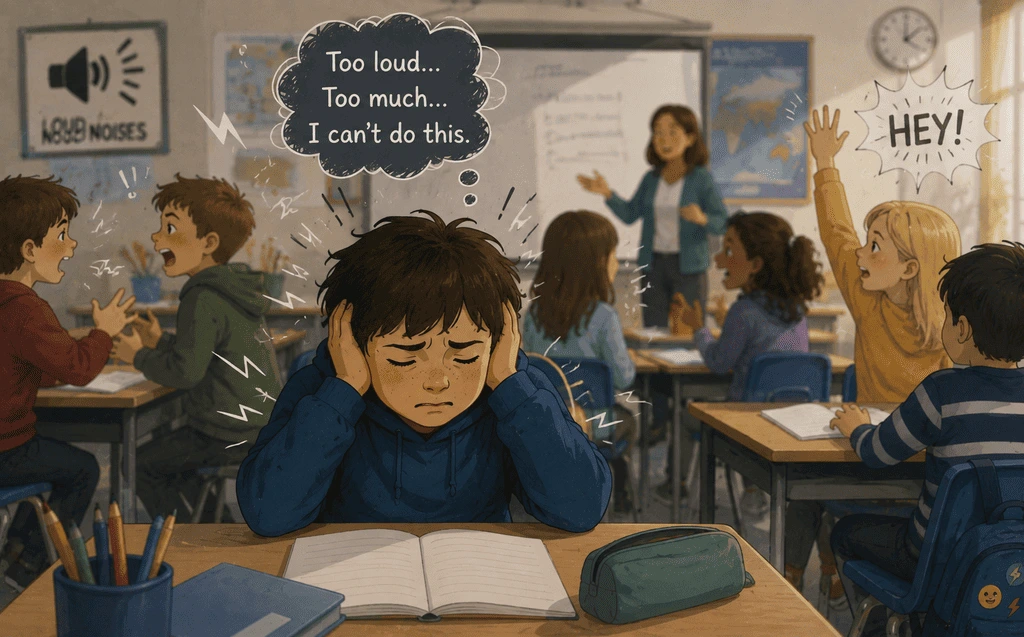
Imagine trying to focus in a classroom where every sound feels too loud. The lights feel too bright. You struggle to catch what the teacher is saying and need them to repeat it. Even writing can feel harder, and you may put your head down to concentrate and get the words right.
This is how many autistic students feel while at school. And very often, the emphasis is on how to make the child cope better at school, instead of trying to understand what causes the school-related anxiety.
We take a closer look at why autistic people may avoid school and what could make the school day easier.
What is School Avoidance?
School refusal, also known as school avoidance, happens when a child finds going to school emotionally overwhelming. This can lead to anxiety, distress and repeated or long-term absence from school.
Also known as Emotionally-Based School Avoidance (EBSA), school refusal affects around 6.2% of neurotypical pupils. For neurodivergent children, the numbers are much higher. Among pupils struggling to attend school, 92.1% were neurodivergent, and 83.4% were autistic. For children not attending at all, the numbers are 95.7% for neurodivergent students. This includes children in mainstream education.
It is also very important to distinguish between school refusal and truancy.
School avoidance: Going to school can cause intense fear, anxiety or distress, leaving the student feeling that they simply cannot face another school day. Parents or carers are usually aware that they are staying at home.
Truancy: The student deliberately misses school, often without their parent or carer knowing. The decision to stay away is generally not driven by the same intense emotional distress around school.
School avoidance is not a clinical diagnosis. It is often a sign that a child is struggling with something deeper, such as anxiety, depression or difficulties around separation. If school avoidance lasts longer than a week, it is recommended to seek professional support.
In order to find the right solution for school avoidance, we first need to understand our child’s needs, skills and potential.

Why School Avoidance Is a Sign Something Isn’t Right?
Anxiety-based school avoidance can be understood as a survival response to situations that feel overwhelming.
A child’s school avoidance is often a sign of an intense inner struggle occuring for a number of potential reasons. This may involve different personal and environmental factors, including the child’s mental health and social anxiety.
For autistic children, the school (if not adapted to the child’s personal needs) may become a serious source of fear and distress. What may look like stubbornness or refusing to cooperate can be an autistic child saying, in the only way they can, “I can’t cope with this anymore.” When every school day brings overwhelming noise, anxiety, social pressure or expectations that feel too much, going back can become deeply frightening.
School anxiety often becomes more noticeable around the ages of 10 and 11, many parents report. At this stage, academic demands increase, friendships and social expectations become more complex, and many children begin preparing for the move to secondary school. For autistic children and young people, these changes can feel especially overwhelming, increasing the likelihood of school-related anxiety and school refusal.
Some young people find school much harder than others because the environment or routine simply doesn’t work for them. This may be linked to mental health difficulties, such as anxiety or depression, or neurodivergence, including autism, ADHD, dyslexia or dyspraxia. When their needs are not recognised or supported, every school day can feel overwhelming.
Our Autism Accredited community brand, Leaf Complex Care, has developed an Autism Guide for Parents filled with practical tools and gentle, everyday strategies to help make life easier and more meaningful for your child. You can download the guide to access the full range of advice and resources.
5 Key Reasons Autistic People Avoid School
No two autistic people experience school in the same way. The reasons below are some of the most common challenges that can make attending school feel overwhelming, and many children and young people experience more than one at the same time.
Sensory Overload
For many autistic people, school can be a constant source of sensory overload. Busy corridors, loud classrooms, bright lights, crowded lunch halls and unexpected noises can keep the nervous system in a heightened state all day. When this happens every day without enough opportunities to recover, simply walking through the school gates can begin to feel overwhelming.
Exhaustion of Social Masking
Many autistic people spend the school day trying to hide autistic traits, so they fit in with those around them. They may carefully monitor their behaviour, copy classmates, force eye contact or suppress stimming. Although this often goes unnoticed, masking requires an enormous amount of energy and can leave someone emotionally and physically exhausted, making school increasingly difficult to face.
Difficulties with Change and Transitions
School is full of transitions, from moving between classrooms and changing teachers to timetable changes, supply staff or unexpected events. While these may seem small to others, they can create significant uncertainty and anxiety for autistic people. Without enough preparation or predictability, even minor changes can make school feel unsafe and stressful.
For many autistic children, having one trusted adult at school can make transitions feel much less overwhelming.
Bullying and Social Exclusion
Feeling different, misunderstood or left out can have a profound impact on an autistic person’s willingness to attend school. Some autistic students experience bullying, while others face more subtle forms of exclusion, such as being ignored, misunderstood or struggling to build friendships. Over time, these experiences can make school feel emotionally unsafe and increase the desire to avoid it.
Executive Functioning Challenges
Getting ready for school involves much more than simply turning up. Planning the morning, organising belongings, remembering homework, managing time, switching between tasks and coping with multiple instructions all rely on executive functioning skills. When these tasks become overwhelming, the school day can feel impossible before it has even begun.
Pathological Demand Avoidance
Many parents spend months wondering why nothing seems to help. Then they come across Pathological Demand Avoidance (PDA), and suddenly many of the pieces fall into place. Everyday demands that most people hardly notice can trigger overwhelming anxiety, making school feel impossible to face. For many families, understanding this is the first step towards responding with less pressure and more understanding.
For some autistic people, everyday demands can become so overwhelming that even getting dressed, leaving the house or walking into the classroom feels impossible. This experience, often described as Pathological Demand Avoidance (PDA), can make school particularly difficult because increasing pressure often leads to increasing anxiety.
Difference in Communication and Learning Styles
Communication and learning styles used in mainstream education do not always reflect how autistic people learn best. Some autistic people thrive with visual or highly structured learning, while others communicate more effectively using visual supports or Augmentative and Alternative Communication (AAC) devices. When teaching and communication are adapted to the individual’s strengths and preferred style, they are better able to participate in learning and demonstrate what they know.
For more social story videos and resources, visit our free library.
Signs That an Autistic Child May Be Struggling at School
Many autistic children try their best to cope at school, so the first signs often appear once they get home. Looking out for changes in your child’s emotions, behaviour or physical wellbeing can help you recognise when school is becoming too overwhelming.
Emotional signs
- Increased anxiety before school
- Becoming tearful or easily upset
- Low mood or loss of confidence
- Withdrawing from family or friends
- Saying they hate or fear school
Physical signs
- Frequent headaches or stomach aches
- Trouble falling asleep or staying asleep
- Extreme tiredness after school
- Changes in appetite
- Becoming more sensitive to noise, lights or touch
Behavioural changes
- More meltdowns or shutdowns
- Increased stimming
- Refusing to get dressed or leave the house
- Avoiding conversations about school
- Needing hours, or even the rest of the day, to recover after school
- Losing interest in activities they usually enjoy
For many autistic children and teens, anxiety becomes most noticeable on school mornings and during the school week, rather than at weekends.
The Impact of Autism Masking at School
Many parents tell us the same thing: “My child seems fine at school, but falls apart as soon as they get home.” This can happen because their child has spent the entire day hiding how overwhelmed they really feel. Instead of asking for help, they keep going, trying to meet expectations and avoid standing out, even when it takes every bit of energy they have.
Eventually, all of that effort has to come out somewhere. What looks like an after-school meltdown, shutdown, or extreme exhaustion is often the release of everything they have been holding in all day. When this happens day after day, it can contribute to autistic burnout, increasing anxiety and, for some, reaching a point where going back to school no longer feels possible.
Many autistic people have a strong sense of empathy and communicate with genuine honesty. Yet, the double empathy problem is often particularly evident in school and educational settings, where differences in communication can easily be misunderstood. This can lead many autistic people to feel they need to mask their autistic traits in order to fit in.
How Schools Can Better Support Autistic Pupils
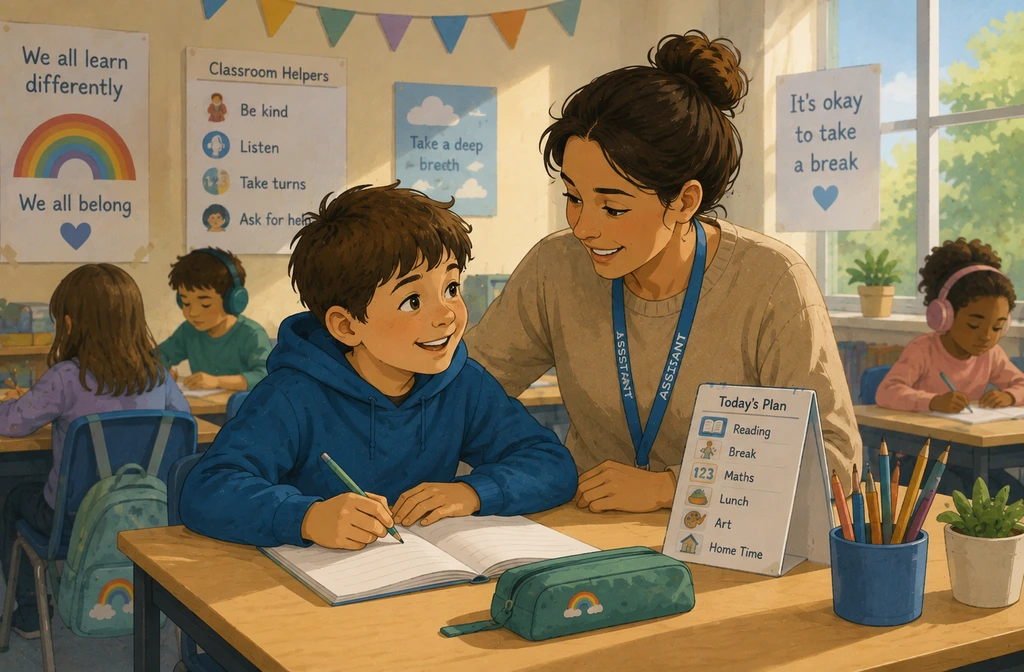
There is no single approach that works for every autistic pupil. However, schools that listen, adapt and work together with families are often better able to reduce distress and help pupils feel safe enough to engage with learning.
Seeing the Whole Child
- Listening to the pupil’s experiences, not just their behaviour.
- Working closely with parents, SENCOs and mental health professionals.
- Reviewing support regularly as the pupil’s needs change.
Creating the Conditions to Thrive
- Reducing sensory demands where possible.
- Preparing pupils for changes to routines or timetables.
- Providing access to a quiet space when regulation is needed.
- Offering flexible ways to communicate, learn and participate.
Acting Early, Not Waiting for a Crisis
- Looking beyond attendance to recognise signs of distress.
- Responding to concerns before they become school refusal.
- Supporting wellbeing alongside learning so pupils feel safe enough to succeed.
The Importance of Early Intervention
Research shows that the longer school refusal continues, the more difficult it becomes for a child to return to education. A recent study found that children whose school refusal had lasted less than one year were more than three times as likely to return to school than those whose difficulties had continued for longer.
Early intervention gives families and schools time to understand what is happening before patterns become deeply established. It creates opportunities to identify sensory triggers, review the learning environment, adjust expectations, strengthen support through the school’s SEND team, involve mental health or autism specialists where needed, and develop strategies that reflect the child’s individual needs. For many autistic pupils, these changes can make the difference between continuing to struggle in silence and feeling able to engage with education again.
Many parents report that their child’s wellbeing improved after moving to online education, particularly when school-related anxiety or sensory overwhelm had become severe. For some autistic children, learning from home can reduce the pressures that make attending school so difficult and provide an opportunity to re-engage with learning in a way that feels more manageable. However, every child is different, and online education is just one of several options that may be considered as part of an individual support plan.
Professional Support with Catalyst Care Group
If school has become a source of anxiety, your loved one does not have to face it alone. At Catalyst Care Group, we work alongside families, schools and professionals to understand what is making education difficult, identify the support a child needs and create a plan that reflects their individual strengths, communication style and learning needs.
Our multidisciplinary team provides specialist assessments, Positive Behaviour Support (PBS), multimedia and AAC communication support, and therapeutic interventions to help autistic children and young people feel safer, more understood and better supported in education. Whether additional support is needed within mainstream education or a different approach is being explored, we focus on creating the conditions where every child has the opportunity to learn, communicate and thrive.
If you are looking for specialist autism support, our Autism Accredited teams work with families to understand each person’s unique needs and provide tailored therapeutic support, specialist assessments and practical strategies that promote communication, wellbeing and greater independence.
Contact us today to discuss the details.