
Key Takeaways
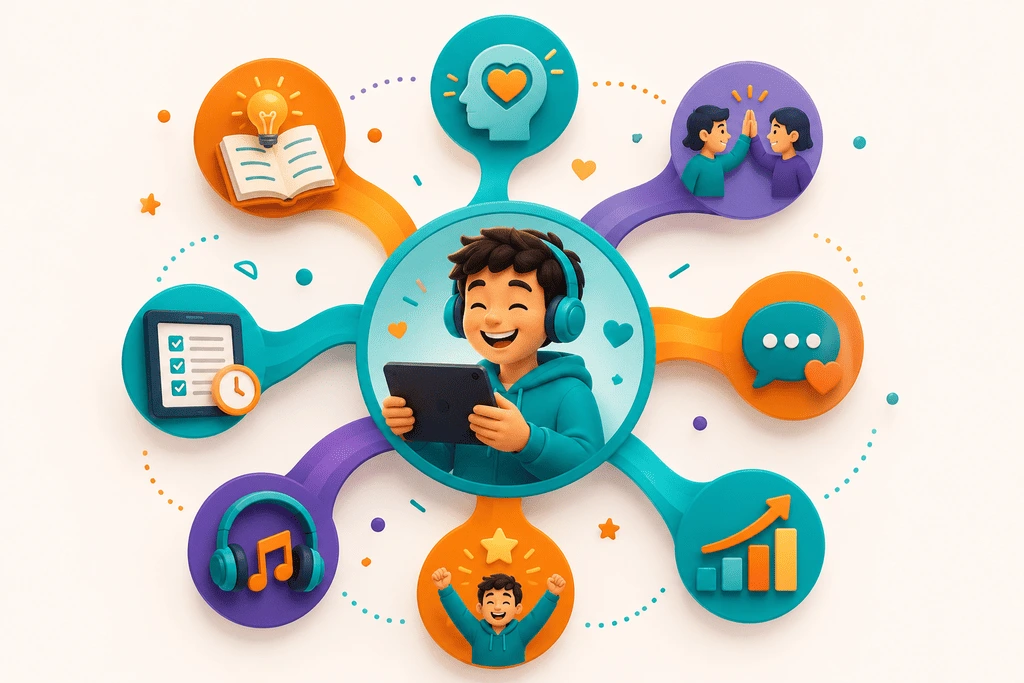
- Multimedia can improve communication skills for people with autism, learning disabilities, and speech or language difficulties.
- Visual and interactive learning tools can help children and students understand information more clearly and feel more engaged in education.
- Multimedia can support adults to communicate choices, build independence, teach new skills and access community life more confidently.
- Personalised videos, visuals, and sensory tools can reduce anxiety, support emotional regulation, and make everyday situations easier to understand.
Multimedia support for autism and learning disabilities uses visual and interactive approaches to support learning, teaching, communication, and everyday understanding. This can include tools for non-speaking people, such as AAC (Augmentative and Alternative Communication) apps, visual schedules, video modelling, video animation social stories and sensory-based educational activities that make information more accessible and easier to process.
Interactive software, personalised multimedia resources, and video-mediated teaching can help with skill development, social interaction, emotional understanding, routines, and building greater independence in daily life.
The Role of Multimedia in Support Services
Multimedia and assistive technology approaches have shown remarkable results in supporting people with communication challenges, including people who use non-speaking forms of communication. They are widely used across community support, schools, and during transitions from hospital to community care to help people access information in ways that are easier to understand and process.
At Catalyst Care Group, we use multimedia to support assessments around Mental Capacity and decision-making by exploring four key questions:
- Can the person understand the information they are receiving?
- Can they communicate their thoughts or decisions back?
- Can they retain that information?
- Can they weigh up the pros and cons of a decision?
For some people, verbal communication or written information may simply be too complex. This is where multimedia can become a powerful tool. Through visual supports, social stories, videos, and different forms of communication, information can be broken down into smaller, more accessible parts, giving people more time to process and understand what is being asked of them.
A person should always be assumed to have capacity unless proven otherwise. Multimedia approaches can help give people the best possible opportunity to understand information and stay involved in decisions about their own lives. Rather than taking decision-making away, these approaches can empower people to communicate choices, express preferences, and remain actively involved in everyday decisions with the right support around them.
One of the downsides of traditional social stories is that you normally need a person to explain the story. The context or approach to stories can change depending on the person reading them and on how they are delivered. With the power of multimedia, the person can review the stories independently, so they can review, retain and question parts of the story in their own time. Having their own space and time to understand the information being given to them is such a benefit. – Benjamin Andrew
Benefits of Multimedia for People with Learning Disabilities and Autism
Communication looks different for everyone. For some people with learning disabilities, autism, or speech impairments, expressing thoughts, understanding information, or keeping in touch with people they care about can be difficult, particularly when communication relies heavily on spoken or written words. Multimedia can open up new ways for people to connect, communicate, and take part in everyday life through visuals, videos, photos, symbols, and personalised communication tools that are easier to understand and respond to.
It can help people stay connected with family members who live far away, reduce frustration during communication, and create more opportunities for people to express choices, feelings, and preferences.
This is especially important when supporting people who may struggle with decision-making or understanding complex information, as multimedia can present information in a clearer and more accessible way, giving people a better opportunity to process information and be involved in decisions about their own lives.
Visual Multimedia Learning
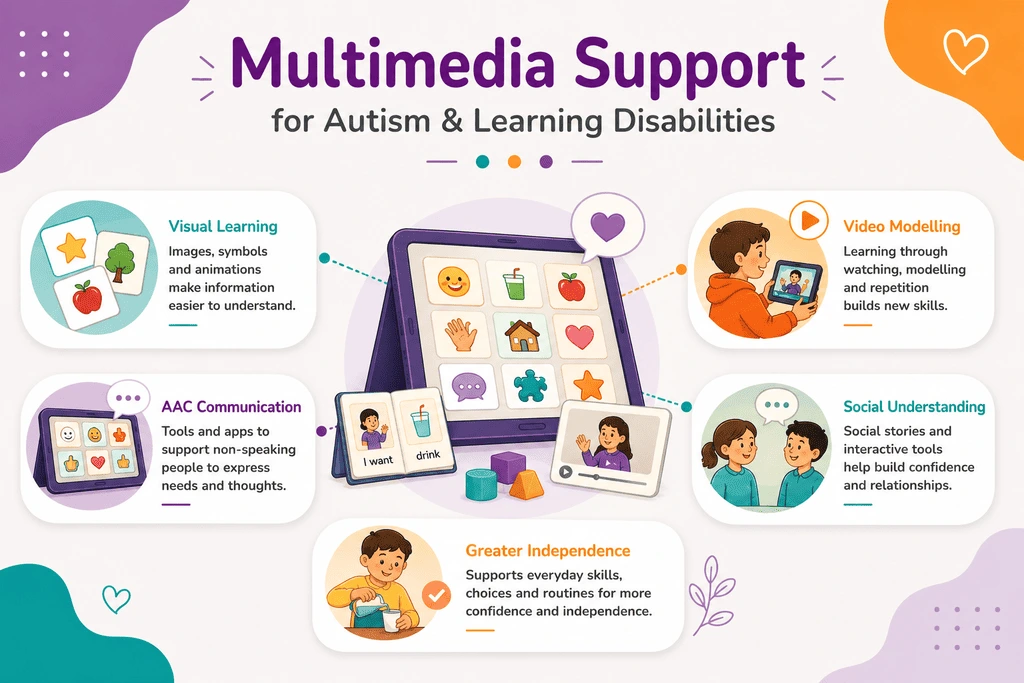
Visual multimedia learning can make communication and everyday information much easier to understand, especially for people who process spoken or written information differently. Long conversations, complex instructions, or large amounts of text can sometimes feel overwhelming or difficult to retain.
Visual support gives people more time to process information and understand what is being communicated in a clearer, more accessible way. For many people with autism, learning disabilities, ADHD, speech impairments, or non-speaking forms of communication, visual tools can reduce confusion, support memory, and improve confidence in everyday situations such as appointments, shopping, cooking, travelling, or making important decisions about their own care and support.
Examples of how visual multimedia learning can help in everyday life:
- Infographics – breaking down steps visually, such as how to attend a medical appointment, use public transport, or prepare a meal
- Videos – showing real-life examples of daily routines, self-care, or social situations in a way that feels easier to follow
- Animations – explaining emotions, safety, boundaries, or health information using simple visual storytelling
- Visual schedules – helping people understand what will happen during the day and reducing anxiety around changes or transitions
- Picture-based communication tools – supporting people who struggle with speech or written communication to express choices, needs, and preferences
- Interactive learning apps – helping people practise communication, independence, and life skills at their own pace
- Step-by-step visual instructions – supporting tasks such as brushing teeth, taking medication, preparing food, or using household appliances
Practice leadership – We use PBS values and the EDDY framework. EDDY training (E=Explain, D=Demonstrate, D=Do under supervision, Y= You have a go). We can create multimedia examples to help deliver consistent ways of working and learning new skills. The video can explain to the support team how to deliver a task in a way that the person has co-created. The video then demonstrates that, under supervision, support teams and the person we are supporting can be involved. Finally, the person can demonstrate their competency and celebrate their achievement. – Benjamin Andrew
Visual learning can also play an important role in helping people take part in decision-making. When information is presented in a way that feels clearer and easier to process, people have a better opportunity to understand choices, communicate preferences, and stay involved in decisions that affect their lives.
Auditory Multimedia Learning
Auditory multimedia learning can support people who process information more easily through sound, spoken language, rhythm, or repetition. For people with learning disabilities, autism, speech and language difficulties, or people who feel overwhelmed by large amounts of written information, auditory tools can make learning feel more accessible and less pressured.
Listening to information through familiar voices, calming sounds, music, or structured audio can also help with attention, emotional regulation, memory, communication, and everyday understanding. For some people, hearing information spoken aloud gives them more time to process, respond, and engage in a way that feels comfortable and meaningful.
- Audiobooks – can support people who struggle with reading, concentration, or processing written information by allowing them to listen at their own pace.
- Podcasts – helpful for learning through conversation, storytelling, and real-life examples, particularly for people who prefer informal and engaging communication styles.
- Music therapy – can support emotional expression, relaxation, communication, memory, and sensory regulation through rhythm, sound, and familiar music.
- Recorded instructions and voice notes – can make everyday tasks, routines, and decision-making easier to understand and remember.
- Calming audio and sensory sound tools – may help reduce anxiety, support focus, and create a more comfortable learning environment.
Personalised Multimedia Learning
Personalised multimedia learning can make education and support feel far more accessible, flexible, and meaningful for autistic people and people with learning disabilities. Everyone processes information differently. Some people understand better through visuals, others through sound, repetition, movement, or interactive activities.
Multimedia allows support and teaching to be adapted around the person’s communication style, sensory needs, pace of learning, the environment and level of understanding. This can reduce frustration, improve engagement, and give people more opportunities to take an active role in learning and decision-making.
- Adaptive learning software can adjust activities and content based on how a person responds and progresses.
- Personalised video content and interactive apps can support communication, memory, daily living skills, and learning at a pace that feels comfortable.
- Visual schedules, symbols, and multimedia lesson plans can help break information into smaller, easier-to-understand steps.
- Talking Mats can support people to express preferences, communicate choices, and take part in decision-making using visuals and symbols.
- Multimedia tools can give people more processing time, which is particularly helpful for people who find spoken or written information overwhelming or difficult to retain.
Multimedia in PBS
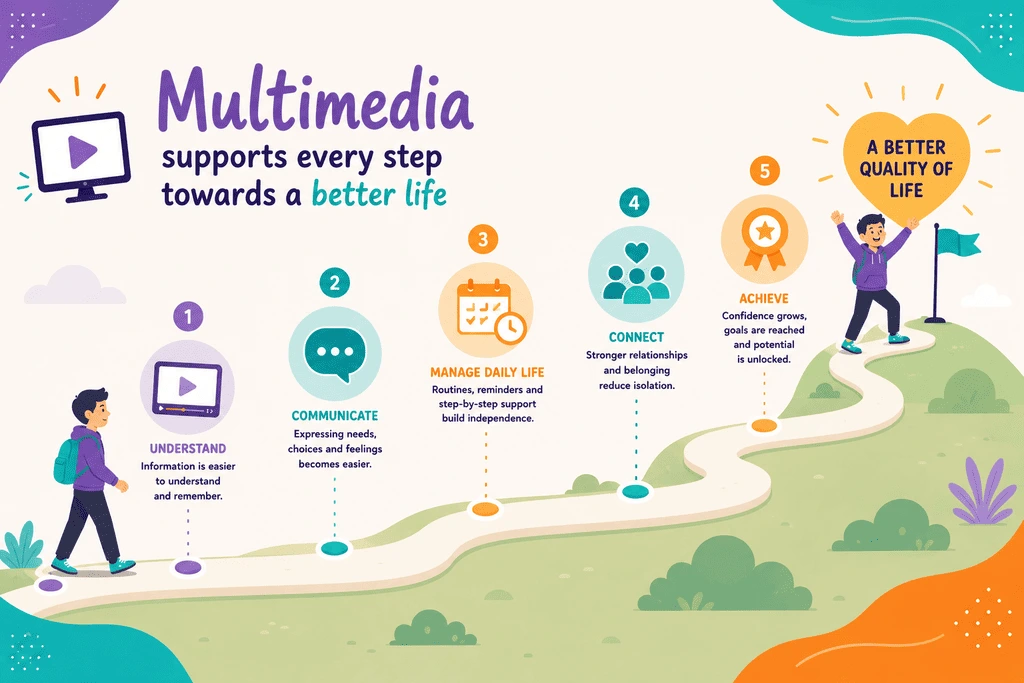
When Positive Behaviour Support and multimedia are used together, the impact can be life-changing. PBS helps teams understand the reason behind distress, communication differences, and behaviours linked to trauma, anxiety, sensory overwhelm, or unmet needs. Multimedia then helps turn that understanding into something the person can actually connect with and process in a way that feels safe, familiar, and meaningful to them. Together, these approaches can reduce distress, improve communication, increase engagement, and support people through major life changes that may once have felt impossible.
Our PBS and Multimedia specialists, Benjamin Andrew, has used multimedia as part of PBS support to help people prepare for transitions from long-term hospital settings into community life. In one case, multimedia played an important role in supporting a person who had lived in hospital for more than 30 years. After spending decades separated from ordinary community experiences, even simple parts of daily life outside hospital had become unfamiliar and overwhelming.
Personalised videos, visual stories, sensory-focused multimedia, and gradual exposure to new environments helped make the transition feel more predictable and less frightening. Multimedia was used to introduce new routines, people, places, sounds, and everyday experiences before the move happened, giving her time to process and build familiarity at her own pace.
The main goal is to use multimedia to advocate for the person we are supporting. PBS is all about co-production. “Nothing about us, without us”. With multimedia, we can give people a voice in new and exciting ways. We want to find an approach that gives that person a voice so they can lead on every element of their care. The most effective way to implement PBS is with the person; with Multimedia, it’s another format to empower that voice and independence. – Benjamin Andrew
This approach helped reduce anxiety around change and supported her adjustment to a completely different way of living – one where she could experience more choice, connection, and independence within the community after decades without access to that kind of life.
Examples of Multimedia Use
Multimedia can be used in many different ways to support learning, communication, daily routines, emotional regulation, and social connection. A short video may help someone prepare for a new environment before arriving there. Personalised photos, music, or familiar voices can bring comfort during moments of distress or uncertainty.
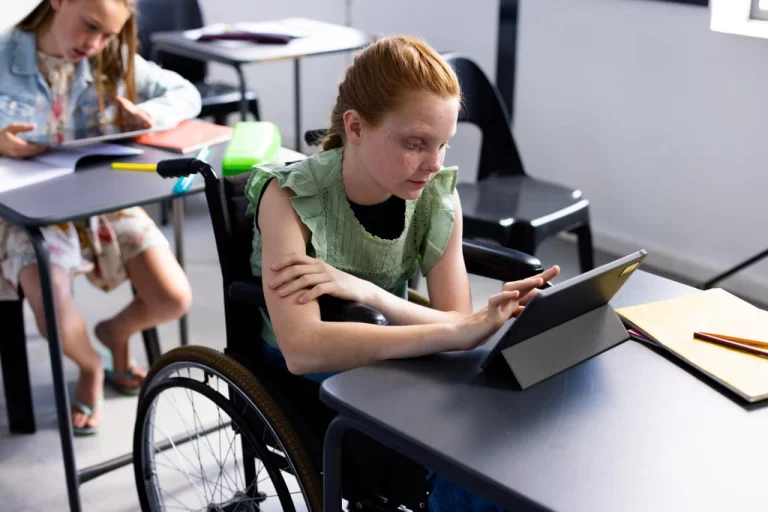
Tablets and communication apps can help non-speaking people express choices, feelings, and preferences more clearly. In schools and support settings, interactive visuals, animations, sensory content, and step-by-step video guides are often used to make information easier to process and remember. Even simple everyday tools such as video calls, visual shopping lists, recorded reminders, or personalised playlists can make daily life feel more manageable, familiar, and accessible.
Communication and Social Skills
Multimedia can support communication and social skills by helping people understand situations that may otherwise feel confusing, fast-paced, or difficult to express in words. Visual tools, personalised videos, interactive communication apps, and photo-based routines can help people feel more prepared, reduce anxiety, and make social interaction more comfortable.
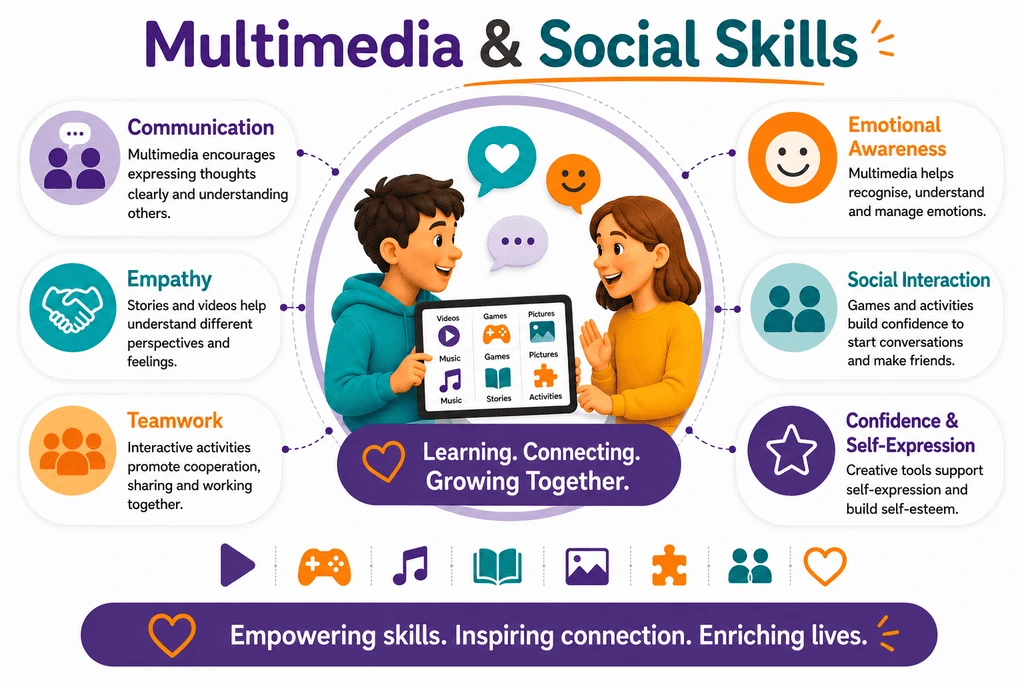
For example, one person who had spent many years in a hospital setting struggled to adapt after moving into a home in the community. Simple everyday activities such as visiting local shops, meeting new people, or making choices about daily routines felt unfamiliar and overwhelming after decades without access to community life.
Through personalised multimedia support – including videos of the new home, photos of staff, visual guides for daily activities, and recordings showing local places and routines – the transition became more understandable and predictable. Over time, this helped the person build trust, communicate preferences more confidently, and gradually take part in social and community activities that had previously felt out of reach.
One person used a form of Makaton to communicate; however, it was very bespoke to that person. So simple Makaton training could only be so efficient, with multimedia we can dream bigger. A bespoke video library of examples was created , demonstrated with an experienced signer. This video was then shared with the individual for their approval. The video was then uploaded to a secure portal. The support team can access it through a QR code in the person’s environment. This enables them to lead on teaching the support team how they would like to sign. The video was watched several times by each member of the team. It greatly improved support teams’ confidence and, in turn, better communication with the individual. This reduced incidents of concern as their method of communication was respected and delivered in an accessible way.
Educational Support
Multimedia can make learning more accessible and less overwhelming for people with autism and learning disabilities by presenting information in ways that are easier to understand and retain. Videos, animations, interactive activities, visual schedules, and audio support can help people learn at their own pace while reducing pressure linked to reading, writing, or verbal instruction alone.
For example, one young autistic person who struggled to participate in classroom-based learning found it difficult to follow multi-step instructions and became anxious during lessons. Support staff introduced short visual learning videos and interactive tablet-based activities linked to the person’s interests, alongside personalised visual timetables that broke tasks into smaller steps.
Over time, the person became more engaged in learning, started completing activities more independently, and felt more confident communicating with staff during educational sessions.
Sensory Integration
Music, projected visuals, calming sounds, interactive sensory rooms, vibration tools, and immersive videos are often used to reduce distress, support emotional regulation, and improve focus during everyday activities. For example, a person with autism who experienced sensory overwhelm during busy parts of the day found transitions and unfamiliar environments particularly distressing.
Support staff introduced personalised calming multimedia, including soft music, familiar nature videos, and sensory lighting before activities that usually caused anxiety. Having access to these sensory tools helped reduce distress, improved tolerance for transitions, and gave the person a more predictable and reassuring way to regulate emotions throughout the day.
Emotional Regulation
Personalised videos, calming music, emotion-based apps, sensory visuals, breathing exercises, and interactive communication tools can help people identify emotions, prepare for stressful situations, and develop coping strategies that work for them.
For example, one person with learning disabilities found it difficult to communicate feelings of frustration, which often led to distress during unexpected changes in routine. Support staff worked with the person to create a personalised multimedia toolkit that included calming music, visual emotion scales, and short videos explaining upcoming changes in a familiar and reassuring way.
Over time, the person began using these tools to communicate emotions earlier, which reduced distress and helped support teams respond in a calmer and more proactive way.
Personalised Approach to Multimedia
Sometimes people are described as “challenging” simply because they have not been given information in a way that makes sense to them. In Positive Behaviour Support (PBS), communication and understanding sit at the centre of everything.
When people cannot fully process verbal information, express emotions, explain pain, anxiety, fear, or even make everyday choices, distress can quickly build. Multimedia can help bridge that gap by turning complex information into something more visual, interactive, familiar, and easier to understand.
Multimedia Advocacy with Catalyst Care Group
At Catalyst Care Group, multimedia is used as part of a wider therapeutic and person-centred approach to support people with autism, learning disabilities, mental health needs, and communication differences. Through the work of the multidisciplinary team – including PBS specialists, community psychiatric nurses, and multimedia specialists such as Ben Andrews – multimedia is used to help people understand the world around them, express choices, reduce distress, and feel more involved in everyday life.
This can include personalised videos, visual communication tools, sensory-based multimedia, transition resources, and digital storytelling tailored around each person’s communication style and experiences.
We use personalised multimedia approach to:
- Make bespoke assessments, including mental capacity assessments
- Ensure safe and effective transition from hospital to community
- Support communication in non-speaking people
- Encourage better communication in daily activities for autistic, neurodivergent and people with mental health needs
- Support social skills and relationships
- Help with skill-building
- Support autonomy, choice and independence
- Encourage people to be actively involved in their care and support plans
Our teams work closely with people and families with multiple needs and complex situations. For any information on how we can support you, contact us today or make a referral.