Head of Complex Care and Continuous Improvement for The Catalyst Care Group
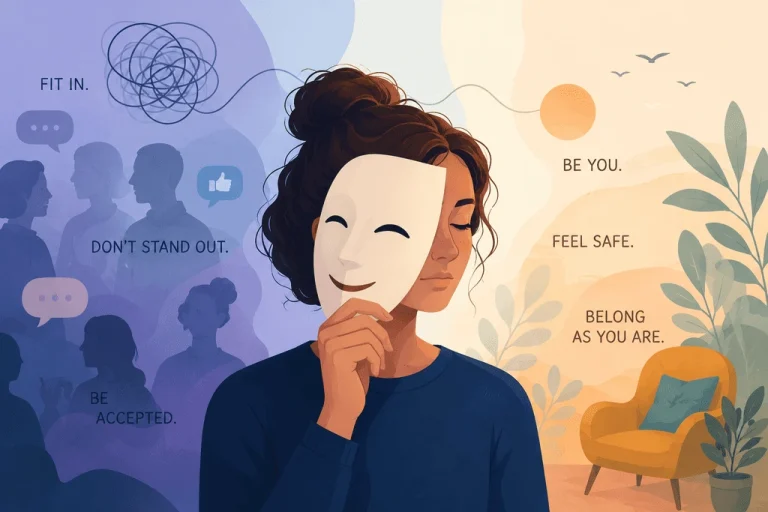
In my experience working with autistic people, ‘unmasking’ isn’t about encouraging someone to change, it’s about creating environments where they feel safe enough not to. – Louise Bray
Key Takeaways
Many autistic people, especially those with a late diagnosis, spend years hiding autistic traits without realising how much energy it takes.
Masking can help autistic people fit into neurotypical environments, but doing it constantly can lead to stress, anxiety, and autistic burnout.
Unmasking is about understanding and accepting autistic traits rather than feeling the need to hide them.
The process is different for everyone and often happens gradually over time.
Small, safe changes can help autistic people feel more comfortable expressing their authentic selves
Who are you when you don’t have to mask?
The Mask We Didn’t Know We Wore
Sometimes, it may take a whole life for someone to figure out that they’ve been masking their true selves in order to look typical and fit into societal norms. Many autistic people spend years of masking at home, at work, at school, at the supermarket – everywhere. And sometimes this slowly becomes part of people’s identity, until one day a burnout occurs.
Relief, revelation, accepting one’s true self, or simply learning a new truth about your own experiences and life. Not so rarely, people don’t even know they are masking as autism remains significantly undiagnosed.
What Does “Unmasking Autism” Mean?
Unmasking autism usually begins when the burden becomes too heavy to carry or when people realize they no longer need to hide who they are in order to fit the neurotypical world.
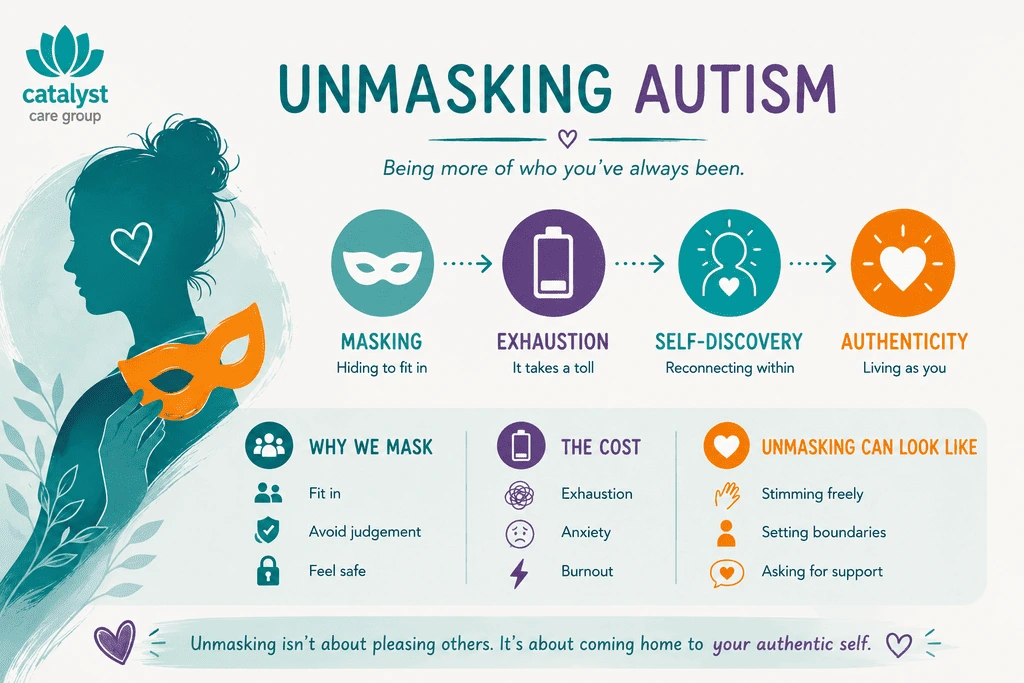
Unmasking autism often begins when pretending becomes more exhausting than being yourself.
Adapted from personal experiences shared by autistic people.
“Today’s walk felt unexpectedly freeing. I wasn’t thinking about how I looked, whether my body language seemed ‘normal’, or if I was saying the right things. I was just walking. Listening to the birds. Watching the trees move in the wind. For a little while, I felt more connected to myself than I had in a long time. But even then, I couldn’t quite shake the feeling that someone might notice the parts of me I usually keep hidden.”
Many autistic people grow up learning that certain behaviours are more accepted than others. Some are told directly to stop stimming, make eye contact, speak differently, or “fit in.” Others pick up these messages over time from school, work, friendships, or social situations. As a result, many spend years carefully monitoring themselves around neurotypical and allistic people, hiding autistic traits and trying to appear more socially acceptable. For some, masking becomes so automatic that they no longer realise how much effort they are putting into it.
The problem is that constantly hiding parts of yourself can be exhausting. Many autistic adults describe feeling drained, anxious, overwhelmed, or unsure of who they really are beneath the mask. Unmasking is often the gradual process of letting go of some of that pressure.
It might mean allowing yourself to stim, being honest about sensory needs, stopping the habit of forcing eye contact, or spending time with people who accept you as you are. It is rarely a dramatic moment. More often, it is a series of small decisions that slowly make life feel a little less like a performance and a little more like home.
Unmasking Traits
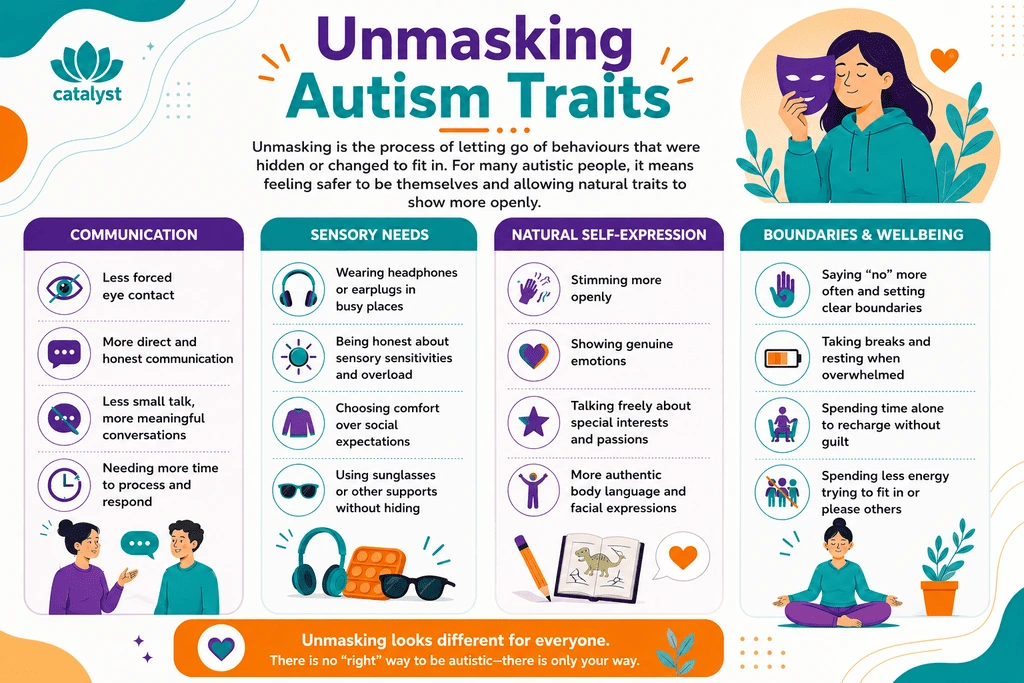
Unmasking is often described as a gradual journey of self-discovery rather than a sudden change. For many autistic people, it means learning which behaviours feel natural and which developed as a way of fitting in. Over time, unmasking can create more space for authenticity, self-expression, and a stronger connection to personal identity.
Stimming more openly (hand movements, fidgeting, rocking, playing with objects)
Needing less eye contact during conversations
Being more direct and honest in communication
Spending less time rehearsing conversations beforehand
Expressing sensory discomfort instead of hiding it
Wearing clothes based on comfort rather than social expectations
Talking more freely about special interests
Taking breaks when overwhelmed instead of pushing through
Setting clearer boundaries and saying “no” more often
Showing genuine emotions rather than performing expected reactions
Using sensory aids such as headphones, sunglasses, or fidget tools in public
Spending less energy monitoring facial expressions and body language
Asking for accommodations or support when needed
Choosing environments and activities that feel comfortable rather than socially expected
Feeling more comfortable being seen as autistic
Embracing personal preferences, routines, and ways of doing things
Allowing natural self-expression without constantly worrying about judgement
I have worked with people who can communicate verbally but wear a wristband, and when green shows, it means they are happy to communicate, but when the red side shows, it means they want to be left alone and no verbal communication, its simple yet effective and their needs are met without having to verbalise how they are feeling – they are able to be their true authentic self. – Louise Bray
Important facts about unmasking autism:
A visibly autistic person may feel pressure to hide behaviours that attract attention or make them appear different from others.
Many autistic people learn to mask from a young age in order to avoid criticism, bullying, or social exclusion.
People with undiagnosed autism often spend years wondering why everyday situations feel more difficult or exhausting than they seem for others.
Having a trusted friend or family member can make the process of unmasking feel safer and less isolating.
Unmasking often involves reconnecting with an authentic self that may have been hidden beneath years of social expectations.
Self-expression may become easier as people feel more comfortable communicating, moving, dressing, or engaging with interests in ways that feel natural to them.
Many autistic people describe feeling a greater sense of relief when they no longer have to constantly monitor every word, action, or reaction.
Learning to accept autistic traits can help reduce shame and increase confidence in everyday life.
How to Start Unmasking Safely
Unmasking is not about changing everything overnight. For many autistic people, masking has been a way to stay safe, avoid criticism, fit in with neurotypical and allistic people, or cope with environments that did not feel accepting. Removing that mask too quickly can feel overwhelming, especially if it has been part of daily life for many years. Many autistic people describe unmasking as a gradual process of noticing what feels natural, what feels forced, and giving themselves permission to explore who they are without constant self-monitoring.
A safe place to start is with small changes in environments where there is trust and understanding. This might mean allowing natural body movements, being more honest about sensory needs, communicating in ways that feel more comfortable, or spending time with people who accept autistic differences without judgement. Unmasking looks different for everyone. It is not about becoming a different person, but about creating more space for authenticity, self-expression, and a life that feels less focused on meeting other people’s expectations and more connected to personal wellbeing.
The Process of Unmasking Autism
For many autistic people, especially those who are recently diagnosed, masking can become such a common coping mechanism that it feels normal. Over time, it can become difficult to tell the difference between what feels natural and what has been done to fit in with neurotypical and allistic people.
Unmasking is the process of slowly getting back in touch with the authentic self. It often involves recognising hidden neurodiversity, questioning lifelong habits, and giving yourself permission to be more comfortable, honest, and genuine in everyday life.
Self-Awareness and Reflection
For many autistic people, unmasking begins with self-awareness and honest reflection. It often involves noticing how autism presents in everyday life and recognising which behaviours, preferences, or coping strategies developed in response to living in a neurotypical society.
This process can bring a mix of emotions, especially when looking back on years spent trying to fit in or meet expectations that did not feel natural. Over time, many people find that radical self-acceptance becomes applicable, allowing them to view themselves with greater understanding and compassion rather than judging themselves in the same way they once did.
Gradual Changes and Boundaries
Unmasking does not have to happen all at once. For many autistic people, it is a gradual process of making small changes and deciding where, when, and with whom it feels safe to be more authentic. Setting boundaries can be an important part of this journey, whether that means saying no to situations that feel overwhelming, allowing more time to recover from social demands, or reducing pressure to meet expectations that do not support wellbeing.
Small Unmasking Experiments
Many people begin with small unmasking experiments in environments where they feel safe and accepted. This might involve spending time with trusted friends, family members, partners, or other autistic people and allowing themselves to communicate, move, dress, or express interests in ways that feel more natural. Starting with safe people and familiar spaces can help build confidence while reducing the fear of judgment or misunderstanding.
Going Slowly and Monitoring Mental Health
Unmasking can bring relief, but it can also uncover emotions that have been pushed aside for many years. Some people experience grief, anger, confusion, or sadness as they reflect on past experiences and the effort it took to hide parts of themselves. These reactions are common and can be part of processing a new understanding of identity.
Moving slowly allows time to notice how changes are affecting mental health and wellbeing. If unmasking begins to feel overwhelming, it can be helpful to pause, seek support, and focus on what feels manageable. The process is not about removing every mask overnight, but about creating more opportunities to live in ways that feel comfortable, authentic, and sustainable.
Why Unmasking is a Health Necessity
For a lot of autistic people, masking starts so early that it feels normal. You learn which parts of yourself other people seem comfortable with and which parts get noticed, questioned, or criticised. After a while, it becomes easier to change your behaviour than to explain it. Many people do it without even thinking about it.
The problem is that constantly putting other people’s comfort before your own can be exhausting. Some autistic people reach a point where they are tired all the time, anxious in situations that never used to bother them, or unsure of who they really are beneath years of trying to fit in. For many, years of masking can also contribute to autistic burnout, where even everyday tasks start to feel overwhelming and energy becomes harder to recover. Unmasking is often talked about as a journey of self-discovery, but for many people it starts much more simply than that. It starts with being tired of pretending everything is okay when it isn’t.
Challenges of Unmasking
For many autistic people, unmasking is not simply a matter of deciding to be more authentic. After spending years, and sometimes entire lives, adapting to fit the expectations of neurotypical and non-autistic people, masking can become deeply ingrained. Many people only begin to recognise how much of their behaviour has been shaped by masking after receiving a diagnosis, connecting with other autistic people, or gaining personal insights into their own experiences. What can look like radical authenticity from the outside may actually involve a long process of questioning habits, coping strategies, and beliefs that have developed over many years.
Unmasking can also bring uncertainty. Some autistic people worry about how family, friends, colleagues, or wider society will respond if they stop hiding certain traits. This can be especially challenging for people who are perceived as having low support needs, as others may struggle to understand why masking has been necessary in the first place. While many people make a passionate argument for unmasking, the reality is that it is not always simple, comfortable, or safe in every environment.
Common challenges include:
Not knowing which behaviours are authentic and which developed as masking strategies.
Feeling vulnerable when showing autistic traits that have been hidden for years.
Worrying about judgement, misunderstanding, or rejection from neurotypical and non-autistic people.
Experiencing grief, anger, or sadness when reflecting on years spent masking.
Feeling pressure to unmask quickly rather than at a pace that feels comfortable.
Managing changes in relationships when others are used to a masked version of a person.
Discovering increased sensory sensitivities, emotions, or support needs that were previously suppressed.
Balancing authenticity with personal safety in workplaces, education settings, or social situations.
Benefits of Unmasking
While the process can feel uncomfortable at first, many people describe feeling a sense of relief when they stop constantly monitoring their behaviour, expressions, interests, communication style, or natural ways of regulating themselves. Instead of using energy to fit in, that energy can be used for things that matter more, such as relationships, hobbies, work, or wellbeing.
Unmasking does not mean ignoring social situations or completely abandoning coping strategies. It means making choices that feel more authentic and sustainable. Many autistic people report improvements in self-understanding, confidence, mental health, and overall quality of life when they feel safe enough to be themselves.
Reduced stress from constantly monitoring behaviour and social interactions.
Lower risk of autistic burnout caused by long-term masking and exhaustion.
Improved self-acceptance and a stronger sense of identity.
More authentic relationships with people who appreciate and accept the real person.
Greater confidence in expressing needs, preferences, and boundaries.
Better emotional wellbeing through reduced anxiety, shame, and self-criticism.
More energy for daily life, interests, work, education, and relationships.
Increased comfort using natural communication styles, stimming, and self-regulation strategies.
A stronger connection to personal strengths, interests, and values.
Feeling less pressure to meet neurotypical or allistic expectations at the expense of wellbeing.
The Goal isn’t to Never Mask Again, but to Have the Choice to Take it Off
Unmasking does not mean never masking again. For many autistic people, masking remains something they choose to do in certain situations. The difference is that it becomes a choice rather than a constant expectation. Instead of feeling pressure to hide autistic traits at all times, people can decide when masking feels helpful and when it is safe to let it go.
For example, someone might spend the entire workday carefully monitoring their body language, facial expressions, and tone of voice. When they get home, instead of continuing to perform, they allow themselves to stim, sit in a way that feels comfortable, and stop worrying about how they are being perceived.
Here are a few more examples:
Example 1: At a Family Gathering An autistic person spends a family gathering forcing themselves to join every conversation, smile at the right moments, and stay in a noisy room even though it feels overwhelming. In the past, they might have pushed through until they felt completely exhausted. With unmasking, they may choose to step outside for ten minutes, spend some time in a quieter room, or be honest that they need a break.
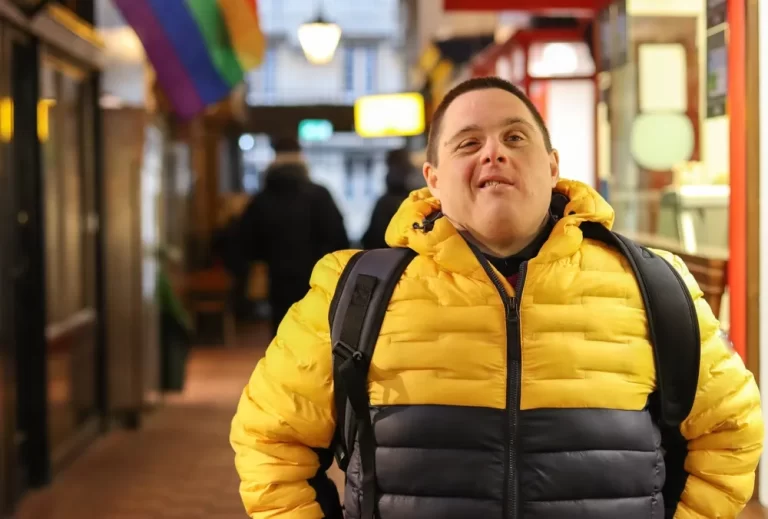
Example 2: During a Walk Someone is used to constantly thinking about how they look to other people while walking in public. They make sure their hands stay still, avoid movements that feel natural, and worry about being judged. As they become more comfortable unmasking, they may allow themselves to move naturally, focus on their surroundings, and stop monitoring every small behaviour.
Example 3: With Close Friends An autistic person laughs at jokes they do not understand or agrees with opinions they do not share because they want to fit in. Over time, they begin feeling comfortable enough to ask for clarification, express their real thoughts, or admit when they are confused without fearing rejection.
Example 4: At Home After Work or School Someone spends the entire day suppressing stimming, managing sensory discomfort, and carefully following social expectations. Instead of continuing to do the same at home, they allow themselves to use sensory tools, engage in favourite interests, wear comfortable clothing, and recover from the effort of masking.
Example 5: Communicating Needs An autistic person always says “I’m fine” when asked how they are feeling, even when they are overwhelmed. As part of unmasking, they begin telling trusted people when they need support, when a situation is becoming too much, or when they need time alone to recharge.
These moments may seem small, but for many autistic people they represent something much bigger: the ability to make choices based on personal needs rather than constantly trying to meet neurotypical expectations.
When we reduce pressure and truly listen, we often see less distress, more authentic communication, and better outcomes for the individual. – Louise Bray
Autism Support with Catalyst Care Group
At Catalyst Care Group, autism support begins with understanding each person as they are. Some autistic people may need more support with communication, daily routines, emotional regulation, sensory experiences, behaviours that communicate distress, or transitions in life. The right support should never be about changing who someone is. It should be about creating the right environment around them, so they feel safer, understood, and able to live with more choice.
We support autistic and neurodiverse people through:
Creating capable environments where every person can thrive
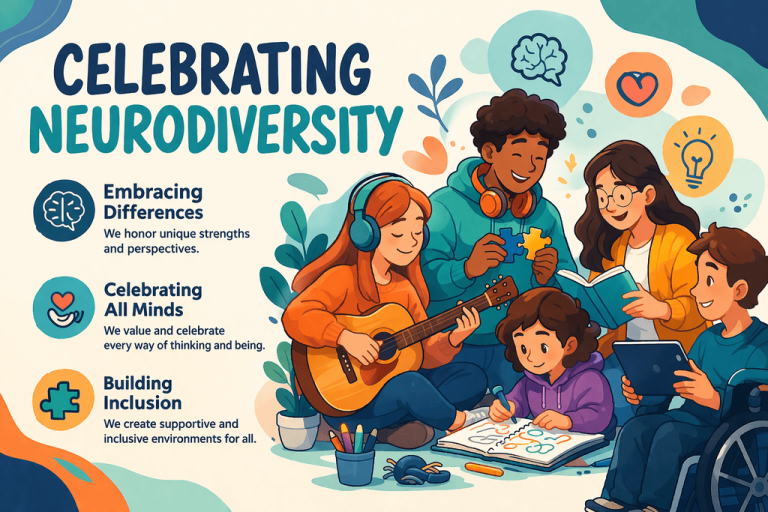
We believe in embracing neurodiversity by recognising the strengths, needs, preferences, and identities of autistic people and the wider neurodivergent community. Through person-centred planning, Positive Behaviour Support, therapeutic input, and consistent support teams, we work alongside people, families, carers, and professionals to build support that respects dignity, promotes independence, and helps each person move towards a life that feels more stable, meaningful, and their own.
FAQs
Can Unmasking Make Autism More Obvious?
Yes. When people stop hiding autistic traits, autism can appear more noticeable to others. Someone may stim more openly, communicate differently, need sensory breaks, or stop forcing behaviours that never felt natural. Autism is not becoming more severe – people are simply allowing themselves to be seen as they are.
Does Everyone with Autism Mask?
No. Some autistic people mask every day without even realising it, while others rarely mask at all. Many factors can influence masking, including personality, life experiences, support needs, and how accepted a person feels by people around them.
Can Unmasking Help with Autistic Burnout?
Often, yes. Autistic burnout is commonly linked to the constant effort of pretending, adapting, and meeting expectations that do not come naturally. Unmasking can reduce some of that pressure and free up energy that was previously spent on monitoring every word, movement, or reaction. Many autistic people describe feeling less exhausted and more connected to themselves when they begin unmasking.
How Long Does it Take to Unmask?
Usually much longer than people expect. Many autistic people have spent years, or even decades, learning how to fit into a world designed around neurotypical and allistic expectations. Unmasking is often a gradual process of getting to know yourself again, learning what feels authentic, and discovering which parts of life were shaped by masking rather than personal choice.
Stimming, a term used to describe self-stimulatory behaviour, is often associated with the autism spectrum and neurotypical individuals. It involves different repetitive movements or sounds that a person may perform…
2023- a year of learning and continuous improvement, alongside gratitude for the difference our nurses and support workers have been able to make for the people we support….
Communication is more than just words.It’s how people connect, share feelings, ask for help, show love, or express pain. While spoken language is one way to do this, not everyone…
As health and social care professionals and human beings, we inherently know that when we are at home surrounded by familiarity and the people we love, we have a better…
A neurodivergent mind does not follow the usual path – it creates new ones, shaped by insight, depth, and remarkable ways of thinking. Being a neurodivergent person means having a…
For far too long, people of all ages facing mental health challenges have been met with stigma and left feeling isolated, with mental and physical health often treated separately. This…
Key Takeaways You’re driving home after meeting friends. The conversation went well. You smiled, laughed at the right moments and nobody seemed to notice anything unusual. But the moment you’re…
It’s THAT time of the year – lights everywhere, festive decorations, people rushing around, and traffic that only seems to grow. It can feel overwhelming for anyone. Yet it’s still…
Autistic meltdown or shutdown occurs when autistic people become overwhelmed by sensory input. For autistic people, meltdowns and shutdowns are not something they choose – they’re instinctive reactions to being…
Despite government initiatives, delayed hospital discharges remain a significant concern for families, hospitals, and local authorities. Within the social care sector, the increase in delayed hospital discharges arises from a…
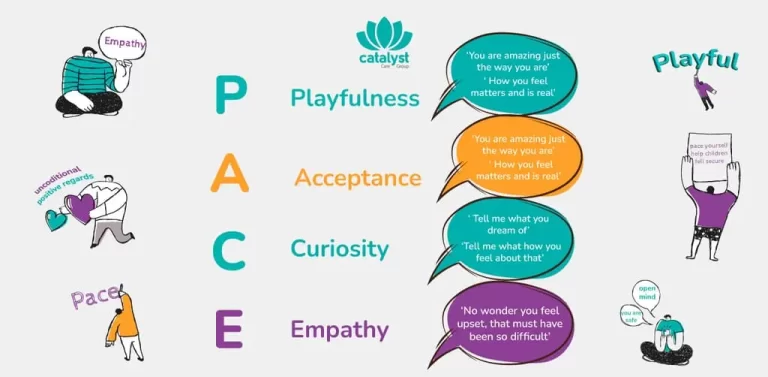
The PACE model involves communicating and building safe, trusting and meaningful relationships with children and young people who have experienced trauma. PACE stands for Playfulness, Acceptance, Curiosity and Empathy. It’s…
Love knows no boundaries, no limits, and no prejudice. It is a universal language that unites us all. What Is Pride Month? To understand pride month, we have to understand…
Our website uses cookies to make your browsing experience better. By using our site you agree to our use of cookies.
You can accept or reject cookies which are not necessary for this site to work by clicking on Cookie preferences below or change your consent at any time by adjusting your cookie preferences in Cookie Settings.
For more detailed information about the Cookies we use, see our Cookie Policy.
Functional
Always active
The technical storage or access is strictly necessary for the legitimate purpose of enabling the use of a specific service explicitly requested by the subscriber or user, or for the sole purpose of carrying out the transmission of a communication over an electronic communications network.
Preferences
The technical storage or access is necessary for the legitimate purpose of storing preferences that are not requested by the subscriber or user.
Statistics
The technical storage or access that is used exclusively for statistical purposes.The technical storage or access that is used exclusively for anonymous statistical purposes. Without a subpoena, voluntary compliance on the part of your Internet Service Provider, or additional records from a third party, information stored or retrieved for this purpose alone cannot usually be used to identify you.
Marketing
The technical storage or access is required to create user profiles to send advertising, or to track the user on a website or across several websites for similar marketing purposes.