


If we invest in meeting people’s needs before they go into crisis, there will be no crises.
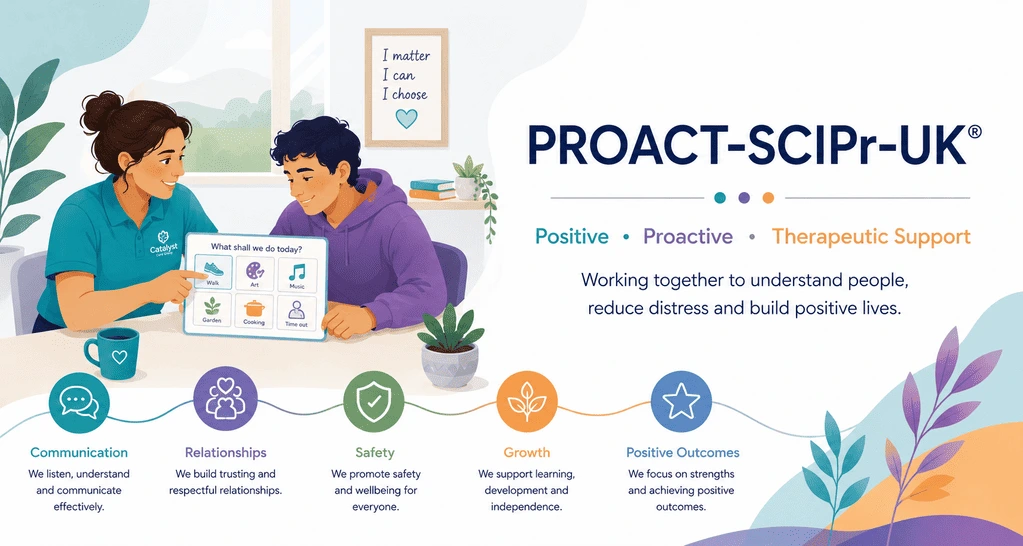
PROACT-SCIPr-UK® is a therapeutic, values-based approach created to support autistic people, people with a learning disability, and people with mental health needs. It focuses on understanding the whole person, recognising their strengths, needs, and experiences, while using proactive strategies to reduce distress and prevent situations from reaching crisis point.
PROACT-SCIPr-UK® is more than a behaviour support framework; it is an approach built on the belief that every person deserves to be understood, respected, and supported to achieve their potential. By focusing on prevention, positive relationships, and meaningful opportunities, we can create environments where people are not simply managed through crises but supported to thrive. – Rebecca Badgley, PROACT-SCIPr-UK® Principal Instructor
With a strong commitment to least restrictive practices, the approach promotes dignity, respect, and consistency, helping people feel supported, understood, and able to maintain greater control over their lives.
PROACT-SCIPr-UK® as a “Positive Range of Options to Avoid Crisis and use Therapy
PROACT-SCIPr-UK® is a framework informed by positive behaviour research and practice, developed to support people with multiple care needs while reducing reliance on restrictive practices. Created by Marion Cornick following the founding of the Loddon School in 1988, the methodology focuses on recognising each person’s strengths, creating opportunities for growth, and supporting people to live active, meaningful lives.
At Catalyst Care Group, we provide PROACT-SCIPr-UK®, a proactive and therapeutic training approach for professionals, parents, and carers supporting children and adults with complex needs and behaviours of concern.
Delivered through our partnership with Loddon Training, the model is built on the practical application of the Loddon Approach, developed by the Loddon School. It helps teams, families, and carers understand the whole person and deliver support that reflects their unique strengths, needs, and circumstances.
The core value of the PROACT-SCIPr-UK® methodology is the belief that every person has the potential to learn, grow, and achieve the things that matter to them. It also recognises that each person has unique physical, emotional, and mental health needs and that, with the right environment and approach, people can be supported to develop greater autonomy and live a more independent and fulfilling life.
Positive Behaviour Support (PBS) focuses on understanding the reasons behind behaviour and recognising signs of distress at an early stage. Through meaningful communication and observation, it helps teams better understand what a person may be expressing through their behaviour and how best to respond.
Within the PROACT-SCIPr-UK® approach, support is guided by principles and practices developed through Loddon Training, including:
- Recognising and reducing triggers before distress escalates
- Using early intervention strategies to provide timely support
- Building positive, trusting relationships
- Developing personalised Positive Behaviour Support (PBS) plans
- Reviewing and adapting support plans as needs change
- Using reactive strategies, including supportive physical interventions where necessary and appropriate, within legal and ethical frameworks
Restraint Reduction and Human Rights
A key principle of PROACT-SCIPr-UK® is that people achieve better outcomes when support focuses on opportunities, strengths, and quality of life rather than restrictions. The approach encourages positive, therapeutic support that helps people develop skills, increase participation in everyday activities, and experience greater choice and control.
By recognising each person as unique, PROACT-SCIPr-UK® promotes support that respects rights, values individuality, and focuses on what matters most to the person, helping them lead a more active and meaningful life.
The 4 Key Pillars of PROACT-SCIPr-UK®
Proactive support within PROACT-SCIPr-UK® focuses on creating personalised environments, routines, and support strategies that reduce the likelihood of distress. By understanding what matters to a person, recognising potential triggers, and responding to needs early, teams can help people feel secure, supported, and more in control of their daily lives.
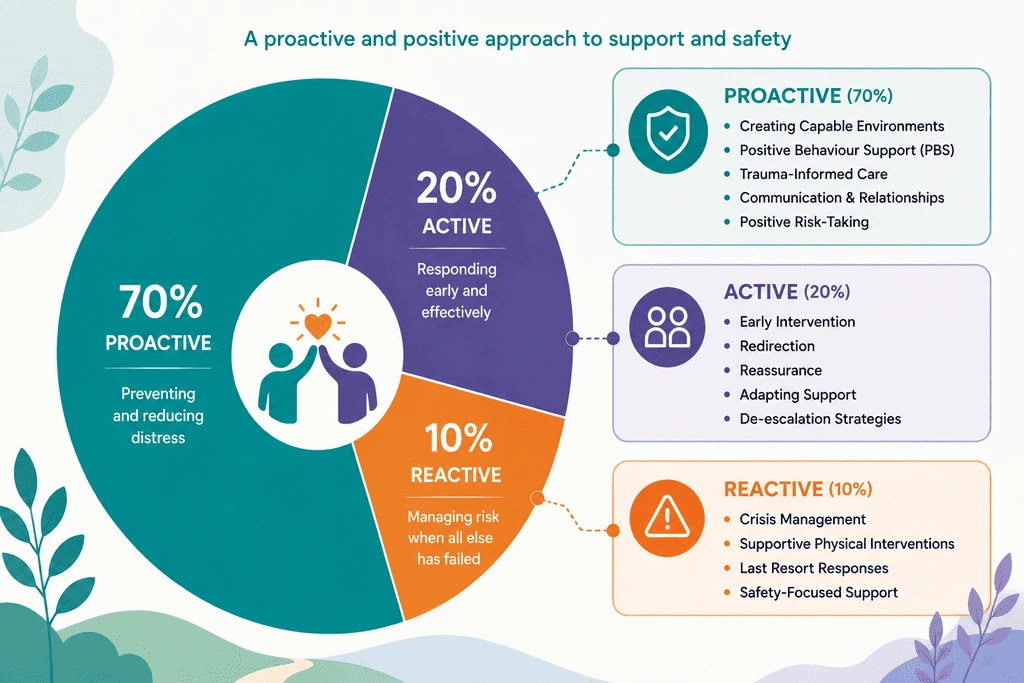
Approximately 70% of the PROACT-SCIPr-UK® approach is focused on prevention, taking a proactive approach to understanding triggers, building positive relationships, developing skills, and adapting environments to reduce stress. Around 20% focuses on active support through early intervention and de-escalation strategies, while the remaining 10% involves reactive responses, with restrictive practices only considered as a last resort when there is a serious risk to safety.
Proactive Strategies: Creating Capable Environments
Being proactive means understanding the person beyond the behaviour. This includes recognising routines, preferences, communication styles, and the things that help people feel safe, comfortable, and successful. It involves identifying potential triggers early, reducing unnecessary sources of stress, and working alongside multidisciplinary teams to create capable environments that support positive outcomes.
For example, a person who becomes distressed in noisy, crowded environments may benefit from quieter spaces, visual schedules, or advance preparation before transitions. Small adjustments like these can significantly reduce anxiety and help the person feel more confident and in control. – Rebecca Badgley, PROACT-SCIPr-UK® Principal Instructor
Creating capable environments provides the foundations for people to lead more engaging and independent lives, with greater choice, fewer restrictions, and improved wellbeing. This can be achieved through:
- Trauma-informed care that recognises the impact of past experiences
- The PERMA model to support wellbeing and quality of life
- Positive risk-taking that encourages confidence and personal growth
- Personalised Positive Behaviour Support (PBS) strategies
- Multimedia tools that strengthen communication and understanding
Active Strategies: Responding Early to Distress
Active strategies focus on recognising and responding to early signs of distress before a situation escalates. This involves using de-escalation techniques, reassurance, effective communication, and personalised support strategies to help people regain a sense of safety and control. By intervening at the earliest opportunity, teams can often reduce the likelihood of more restrictive responses becoming necessary.
Reactive Strategies: Only as a Last Resort
Reactive strategies represent the smallest part of the PROACT-SCIPr-UK® approach and are only considered when there is an immediate risk to the safety of the person or others. In these situations, supportive physical interventions may be used as a last resort and for the shortest time necessary. Any intervention is guided by legal and ethical frameworks, with a continued focus on safety, dignity, wellbeing, and reducing future reliance on restrictive practices.
Imagine a young person who begins pacing, withdrawing from conversation, or showing signs of frustration. Rather than waiting for the situation to escalate, staff may offer reassurance, reduce demands, or provide access to a preferred activity. Early intervention often helps restore a sense of safety before a crisis develops. – Rebecca Badgley, PROACT-SCIPr-UK® Principal Instructor
Post-Crisis Support: Recovering and Learning
Support does not end when a crisis has passed. Post-crisis support focuses on helping the person recover, rebuild a sense of safety, and return to everyday routines in a way that feels comfortable for them. It also provides an opportunity for reflection and learning, helping teams understand what happened, identify any unmet needs or triggers, and make adjustments to support plans, environments, or strategies to reduce the likelihood of similar situations occurring in the future.
Core Principles of Proact SCIPr-UK®
At the heart of PROACT-SCIPr-UK® is a commitment to responding positively, building relationships of trust, and creating safe and supportive environments where people can learn, develop, and achieve meaningful outcomes.
Proactive Rather Than Reactive Support
The main purpose why this care approach was developed is to reduce the need of using reactive support and restraint to the minimum, only as a last resort and only when it affects the person’s safety, or the safety of people around them.
But most importantly, this positive and proactive approach has shown remarkable results in reducing challenging behaviour through positive reinforcement and ongoing support.
When you truly understand the person you support, what they like or dislike, what they dream of, hope for or how would like to spend their day, and when you allow people to be actively involved in their care, the risk of distress is significantly reduced.
Person-Centred Care
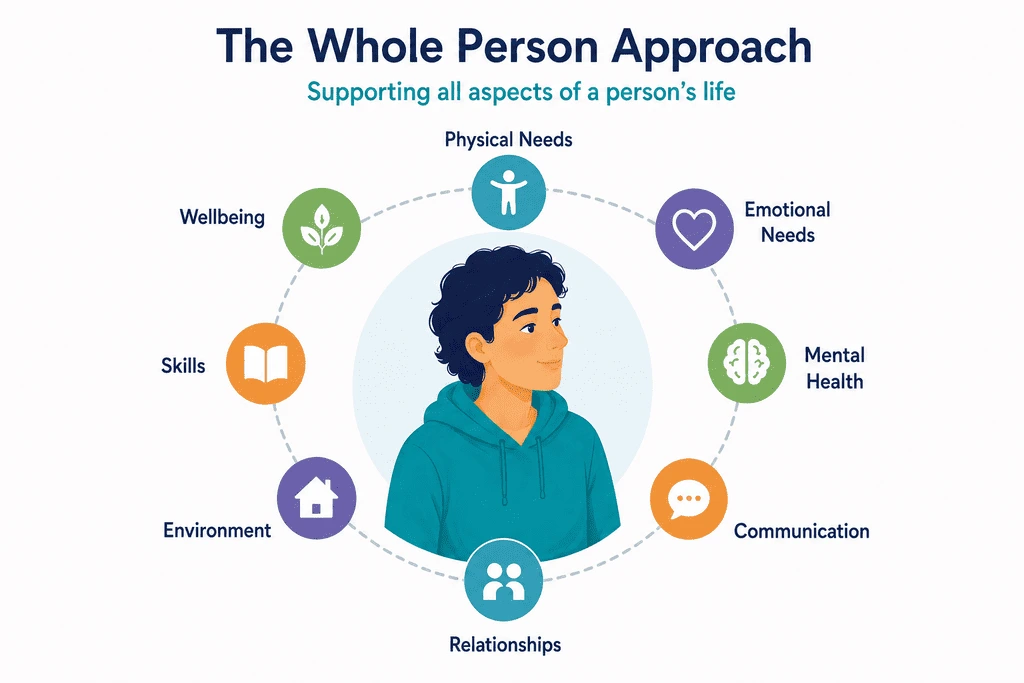
PROACT SCIPR uk is also called the whole person approach as it places the person in the centre of the care and decision-making. This involves care plans co-produced with people and their families, positive risk-taking and supporting people to become the best versions of themselves.
Person-centred support means understanding what matters to the individual, not simply what is important for them. For one person, this may involve pursuing employment opportunities; for another, it may mean developing friendships, enjoying hobbies, or gaining greater independence in everyday tasks. – Rebecca Badgley, PROACT-SCIPr-UK® Principal Instructor
Least Restrictive Practice
Least restrictive practice is a core principle of PROACT-SCIPr-UK®, promoting support that respects people’s rights, choices, and independence. The approach focuses on understanding needs, reducing barriers, and responding in a positive, non restrictive way that helps people remain engaged and in control of their lives. By placing greater emphasis on prevention, communication, and personalised support, many situations can be managed without the need for restrictive interventions.
When crisis management is required, the focus remains on resolving situations safely while using the least intrusive response possible. Every decision is guided by the person’s wellbeing, dignity, and individual circumstances, ensuring that any intervention is proportionate, appropriate, and only used when absolutely necessary.
Trauma-informed Practice
Trauma-informed practice recognises that past experiences can have a lasting impact on how people feel, communicate, and respond to the world around them. PROACT-SCIPr-UK® encourages teams to look beyond behaviour and consider what a person may have experienced, focusing on building trust, promoting emotional safety, and reducing the risk of re-traumatisation.
A trauma-informed approach encourages professionals to ask, “What has happened to this person?” rather than “What is wrong with this person?” This shift in perspective can lead to more compassionate, effective, and respectful support. – Rebecca Badgley, PROACT-SCIPr-UK® Principal Instructor
By creating supportive relationships and environments where people feel understood, respected, and empowered, support can be delivered in a way that promotes wellbeing, recovery, and outstanding outcomes.
Respect, Dignity, and Human Rights
PROACT-SCIPr-UK® is grounded in the belief that every person should be treated with respect, dignity, and compassion. The approach promotes people’s basic human rights, ensuring they have opportunities to make choices, express their views, participate in everyday life, and be supported in ways that reflect their preferences and needs. By valuing each person as an equal partner in their support, teams can create environments that encourage inclusion, independence, and a greater sense of control over their own lives.
Who Is PROACT-SCIPr-UK® Used For?
PROACT-SCIPr-UK® is designed to support children, young people, and adults who may experience distress, behaviours of concern, communication difficulties, or challenges that impact their daily lives. The approach focuses on understanding each person’s unique needs and providing support that promotes safety, wellbeing, participation, and quality of life.
Autistic People
PROACT-SCIPr-UK® helps teams better understand communication differences, sensory needs, routines, and the factors that may contribute to distress. By creating supportive environments and personalised strategies, autistic people can be supported to develop skills, increase independence, and participate more fully in everyday life.
People with a Learning Disability
For people with a learning disability, the approach focuses on recognising strengths, promoting meaningful opportunities, and providing support that is tailored to the person’s individual needs. This can help improve communication, increase choice and control, and reduce reliance on restrictive practices.
People with Mental Health Challenges
People experiencing mental health challenges may benefit from the proactive, therapeutic nature of PROACT-SCIPr-UK®. The approach encourages positive relationships, emotional safety, and early intervention strategies that help people manage distress and maintain stability.
People with Complex Needs
PROACT-SCIPr-UK® is widely used to support people with complex needs, including those with multiple diagnoses, trauma histories, significant communication needs, or behaviours that challenge services. By bringing together proactive planning, personalised support, and multidisciplinary working, the approach helps create the conditions for positive outcomes and an improved quality of life.
Benefits of PROACT-SCIPr-UK®
PROACT-SCIPr-UK® is a therapeutic training model that helps organisations provide safer, more positive, and person-centred support. By focusing on prevention, active engagement, and understanding the reasons behind behaviour, the approach can improve outcomes for people receiving support while also benefiting staff teams and services delivering complex care. It provides practical alternative strategies that reduce reliance on restrictive practices and strengthen confidence in crisis intervention and everyday support.
Benefits for People
- Increased choice, independence, and participation
- More active engagement in meaningful activities and relationships
- Improved communication and understanding
- Reduced distress and fewer restrictive interventions
- Support that reflects personal strengths, needs, and aspirations
- Greater opportunities to develop skills and confidence
Consider an autistic adult who previously experienced frequent distress during changes to routine. Through personalised support, consistent communication, and proactive planning, they may develop greater confidence in managing transitions, resulting in improved wellbeing and increased participation in daily life. – Rebecca Badgley, PROACT-SCIPr-UK® Principal Instructor
Benefits for Staff
- Increased confidence in supporting people with complex care needs
- Practical tools for crisis intervention and de-escalation
- Improved understanding of behaviour and communication
- Stronger relationships with the people they support
- Greater consistency across teams and services
- A wider range of alternative strategies to support positive outcomes
Benefits for Organisations
- Reduced reliance on restrictive practices
- More consistent and person-centred approaches to support
- Improved quality of care and service outcomes
- Enhanced staff knowledge, skills, and confidence
- Stronger multidisciplinary collaboration
- A proactive framework for supporting people with complex needs
Increased Safety and Emotional Wellbeing
By focusing on prevention, understanding, and positive support, PROACT-SCIPr-UK® helps create safer environments where people feel more secure, supported, and understood. This can lead to improved emotional wellbeing, reduced distress, and more positive outcomes for everyone involved.
When people feel understood and supported, they are often more willing to engage in relationships, activities, and opportunities that contribute to a meaningful and fulfilling life. This is one of the key reasons why prevention-focused approaches are so effective. – Rebecca Badgley, PROACT-SCIPr-UK® Principal Instructor
Reduced Anxiety and Distress
People often experience less anxiety and distress when support is consistent, predictable, and tailored to their needs. A greater understanding of triggers, communication, and individual preferences can help create calmer experiences and more positive outcomes in everyday life.
Greater Choice, Control, and Independence
PROACT-SCIPr-UK® encourages people to take an active role in decisions that affect their lives, helping them develop greater choice, control, and independence. While promoting safety remains important, the approach also recognises the value of providing opportunities for people to learn, grow, and participate more fully in everyday life.
How Catalyst Care Group Applies PROACT-SCIPr-UK®
At Catalyst Care Group, PROACT-SCIPr-UK® forms an important part of how we support people across our services. As part of our commitment to delivering positive, therapeutic, and person-centred support, we have transitioned from traditional PMVA training to the PROACT-SCIPr-UK® approach, placing greater emphasis on prevention, understanding, communication, and reducing restrictive practices.
To embed these principles across the organisation, we provide PROACT-SCIPr-UK® training and annual refresher training for teams throughout Catalyst Care Group. We also recognise the important role families play in supporting positive outcomes and can offer training opportunities to parents and family members who wish to learn more about the approach. This helps create greater consistency between services, support teams, and families, ensuring people receive the same positive and proactive support across different environments.
If you or someone you know is in an urgent need of person-centred and reliable care and support services, reach out to us today.