“What we do each day shapes who we are, how we connect, and how we experience life.”
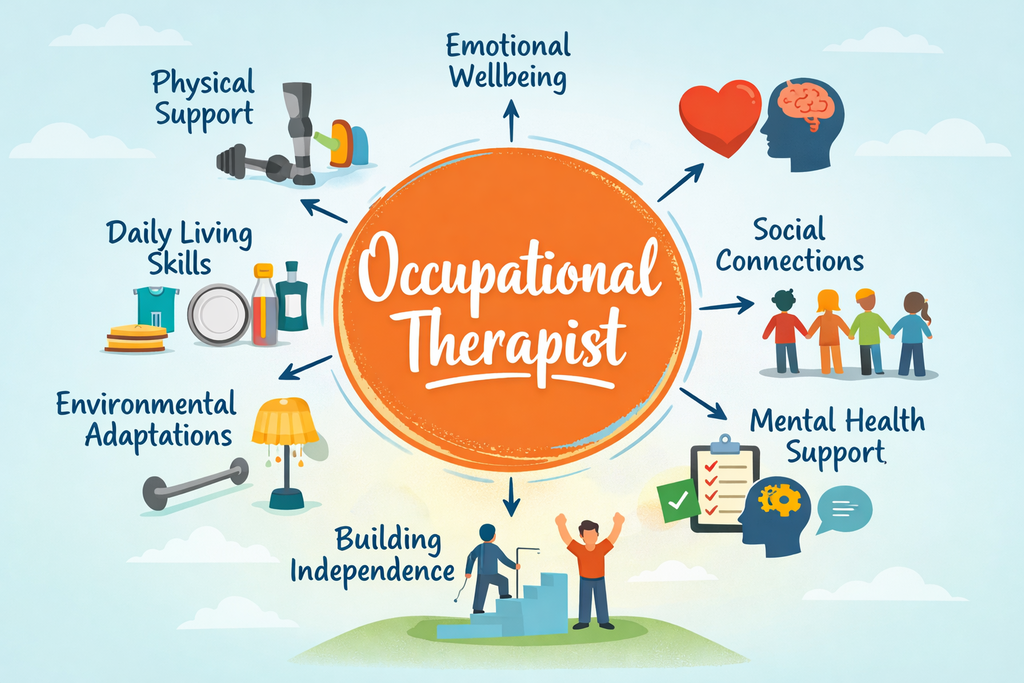
An occupational therapist (OT) supports people to build, regain, or sustain the skills needed for everyday life and work, helping them live with greater independence while navigating physical, mental, developmental, or emotional challenges.
OTs carry out detailed assessments, develop personalised support plans, introduce practical strategies, recommend assistive equipment (such as adapted cutlery or technology), and adjust environments so everyday activities – like dressing, preparing meals, working, or leisure – are more accessible and manageable.
For people with physical or learning disabilities, mental health conditions and neurodevelopmental differences, occupational therapy supports the right to live, participate, and engage in daily life on one’s own terms.
The Role of Occupational Therapists
An occupational therapist supports people reclaim everyday life. When illness, disability, trauma, or change make daily activities harder, OTs work alongside people to understand what matters most and what gets in the way. They support everything from personal care and daily routines to work, learning, mental health, and participation in community life.
By looking at the whole person and the environment around them, occupational therapists adapt activities, build practical skills, and create supportive spaces that enable people to live with greater independence, confidence, and meaning – a wide-reaching role that is often underestimated.
To become an occupational therapist, it takes a true commitment to:
- Understanding daily life and function, exploring what feels difficult right now, what matters most, and what support is already in place, then turning this understanding into practical steps and routines
- Breaking everyday activities into manageable parts, practising them safely, and gradually building confidence and stamina in real-life situations
- Adapting environments at home, school, or work by reducing barriers, improving accessibility, and supporting safer movement
- Introducing and supporting the use of assistive equipment, such as adapted cutlery, seating, bathing aids, writing supports, or technology that helps with daily tasks
- Supporting thinking skills and organisation, including attention, memory, planning, sequencing, and time management, to make daily routines easier to manage
- Using meaningful activity to support mental health and wellbeing, helping build structure, motivation, confidence, and connection to valued roles and activities
- Reducing risk and supporting safety, particularly through practical changes that help prevent falls and injuries
- Supporting recovery and rehabilitation, helping people regain skills needed for personal care and everyday living after illness, injury or trauma.
Occupation” is More Than a Job
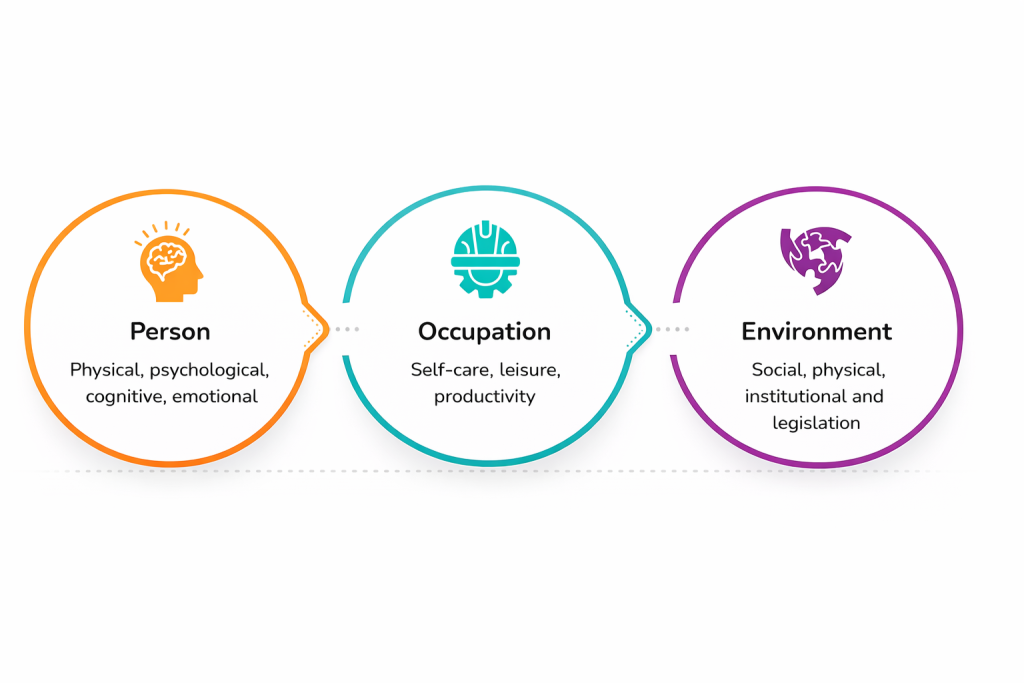
In occupational therapy, “occupation” means the everyday activities that make up life. It includes anything a person needs or wants to do – such as washing, dressing, eating, learning, working, resting, socialising, or spending time with others. These activities give shape to daily life and help people feel connected, capable, and involved. When doing becomes difficult, occupational therapy focuses on helping people stay engaged in the activities that matter to them.
Primary Responsibilities
Primary responsibilities in occupational therapy centre on understanding how a person’s health, environment, and daily activities interact. Occupational therapists focus on what people need and want to do in everyday life, identifying barriers that make these activities difficult and finding practical ways to overcome them.
This involves working alongside people to support daily routines, build skills, adapt activities or environments, and enable safer, more meaningful participation in life at home, at work, and in the community.
Example 1
If getting dressed causes distress due to past hospital experiences, the OT may adapt the routine, introduce clothing choices that feel safer, or change the environment to reduce sensory overload. At the same time, if the person enjoys music or a particular hobby, these interests are built into daily routines to create familiarity, comfort, and motivation.
Example 2
An occupational therapist may notice that meal times are difficult, with the person becoming anxious or withdrawn. Through gentle conversation and observation, the OT learns that certain sounds, textures, or seating positions are upsetting, linked to previous negative experiences. The OT adapts the environment by changing seating, reducing noise, or adjusting food textures, while incorporating familiar foods the person enjoys, making meals feel calmer and more predictable.

Example 3
During assessment, an OT may find that leaving the house causes distress, particularly in busy or unfamiliar places. By understanding past experiences and current triggers, the OT gradually rebuilds confidence, starting with short, quiet outings at preferred times of day, using familiar routes, and incorporating activities the person enjoys, such as visiting a favourite shop or park.
Assessment and Evaluation
Assessment and evaluation involve building a clear picture of daily life by understanding how health, routines, environments, and activities interact. Occupational therapists explore what feels difficult, what matters most, and how people currently manage everyday tasks, using observation, conversation, and practical assessment to identify strengths as well as areas where support is needed.
At Catalyst Care Group, we provide structured, personalised occupational therapy assessments. Using a variety of assessment tools and approaches, the process is shaped around each person as a whole, taking into account lived experiences, including trauma, alongside what brings enjoyment and what may cause distress.
Treatment Planning
Treatment planning brings this understanding together into a personalised approach that reflects real life. Occupational therapists consider priorities, daily routines, environments, and available support, then shape a plan that is realistic, flexible, and focused on meaningful activities rather than abstract outcomes.
Setting Goals and Objectives
Goals and objectives are shaped around what a person wants or needs to do in everyday life. These goals are practical and activity-focused, providing clear direction while remaining adaptable as confidence, ability, or circumstances change.
Therapeutic Interventions
Therapeutic interventions focus on doing. This may include practising everyday activities, adapting tasks or environments, building skills, introducing supportive equipment, or developing routines that make daily life more manageable and meaningful.
Monitoring and Adjustments
Monitoring and adjustments are ongoing, recognising that needs and circumstances change over time. Occupational therapists regularly review progress, listen to feedback, and adapt approaches to ensure support continues to reflect what works best in real-life situations.
Required Occupational Therapist Skills
An occupational therapist must have a verified, up-to-date degree in occupational therapy, along with ongoing professional training to ensure safe, effective, and evidence-based practice.
Occupational therapists build strong relationships with people. They take time to listen, notice how someone is really feeling, and build trust through consistency and respect. They stay calm in difficult situations, pick up on things that aren’t always said, and respond in ways that help people feel safer and more settled.
They are also practical and adaptable, finding ways to make everyday life work better. By working closely with families and teams, occupational therapists help people maintain their dignity, feel more confident, and manage daily life more easily.
Communication Skills
Communication is the foundation of occupational therapy. Occupational therapists listen carefully, ask the right questions, and explain things in clear, simple ways so people feel understood rather than overwhelmed. Strong communication helps build trust, supports collaboration with families and teams, and ensures everyone is working towards the same everyday outcomes.
Patience and Flexibility
Patience and flexibility are also essential for occupational therapists to work at a pace that feels right for each person. Progress does not always happen in a straight line, and occupational therapists adapt their approach when days are harder, routines change or needs shift. This flexibility helps maintain consistency and reduces pressure, making support more sustainable.
Empathy and Compassion
Without empathy and compassion, there is no real therapy and no real outcome. Occupational therapists help people of all ages to find or regain purpose in everyday activities by showcasing empathy and understanding, validating people’s unique needs and challenges, and teaching them new ways to express their needs and talents.
Who Benefits from Occupational Therapy?
Occupational therapy supports people who find it harder to take part in everyday life, including leisure activities that bring enjoyment, relaxation, and a sense of identity. When physical, emotional, or developmental challenges limit access to hobbies, play, social activities, or time for rest, occupational therapists work to remove barriers and help people re-engage in ways that feel achievable and meaningful. This might involve adapting activities, building confidence, or creating routines that make leisure part of daily life again.
Occupational therapy can benefit:
- People with learning disabilities, supporting participation in hobbies, social activities, and community life
- Autistic people, helping manage sensory needs, routines, transitions, and access to preferred interests
- People with physical disabilities, adapting activities and environments so that leisure remains accessible and enjoyable
- Children with global developmental delay (GDD) supporting play, exploration, and early leisure skills that build confidence
- People with mental health challenges using meaningful activity to support motivation, structure, and emotional well-being
Where Do Occupational Therapists Work?
Occupational therapists work across a wide range of settings, supporting people wherever everyday life happens. Their role adapts to the environment, whether supporting recovery after illness, helping children learn and play, enabling people to live more independently at home, or supporting mental health and emotional well-being. This flexibility allows occupational therapy to respond to changing needs across different stages of life.
Occupational therapists work in:
- Hospitals and rehabilitation centres, supporting recovery, daily living skills, and safe transitions
- Schools and educational settings, helping children take part in learning, play, and school routines
- Community and home care, supporting independence, safety, and daily routines in familiar environments
- Mental health facilities, using everyday activities to support structure, confidence, and recovery
- Private practice, offering tailored assessment and support across physical, developmental, and mental health needs
Occupational Therapy with Catalyst Care Group
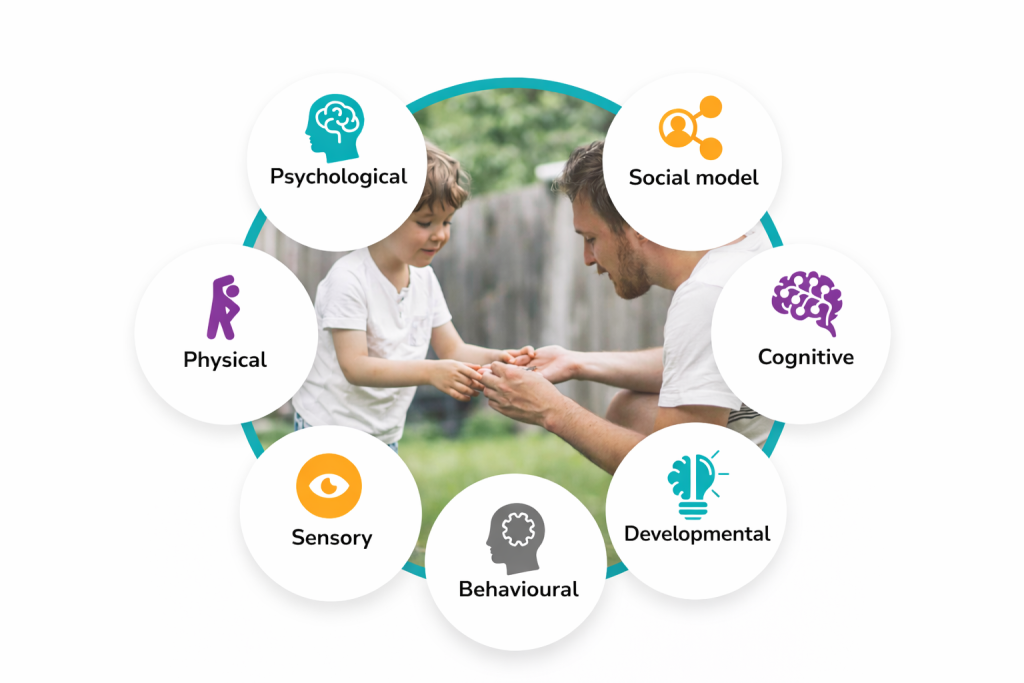
At Catalyst Care Group, occupational therapy focuses on understanding and supporting physical, psychological, social, and environmental needs as part of everyday life. Grounded in evidence-based practice, occupational therapy uses purposeful activity to reduce risk, prevent further disability, and support greater independence across daily routines and activities.
Working closely within a multidisciplinary team of PBS specialists, mental health nurses, CPNs, and multimedia communication specialists, occupational therapists bring a unique and bespoke approach to assessment. This leads to tailored support plans that are fully integrated into daily care plans and responsive to each person’s needs.
At Catalyst Care Group, our approach is practical and person-led, combining professional knowledge with an understanding of everyday life. Support is shaped around what matters to each person and reviewed regularly as needs and abilities change.
Through occupational therapy, the focus is on supporting everyday function in a way that feels safe, realistic, and supportive of overall well-being.
Contact us today, and we’ll ensure you receive the support you need.