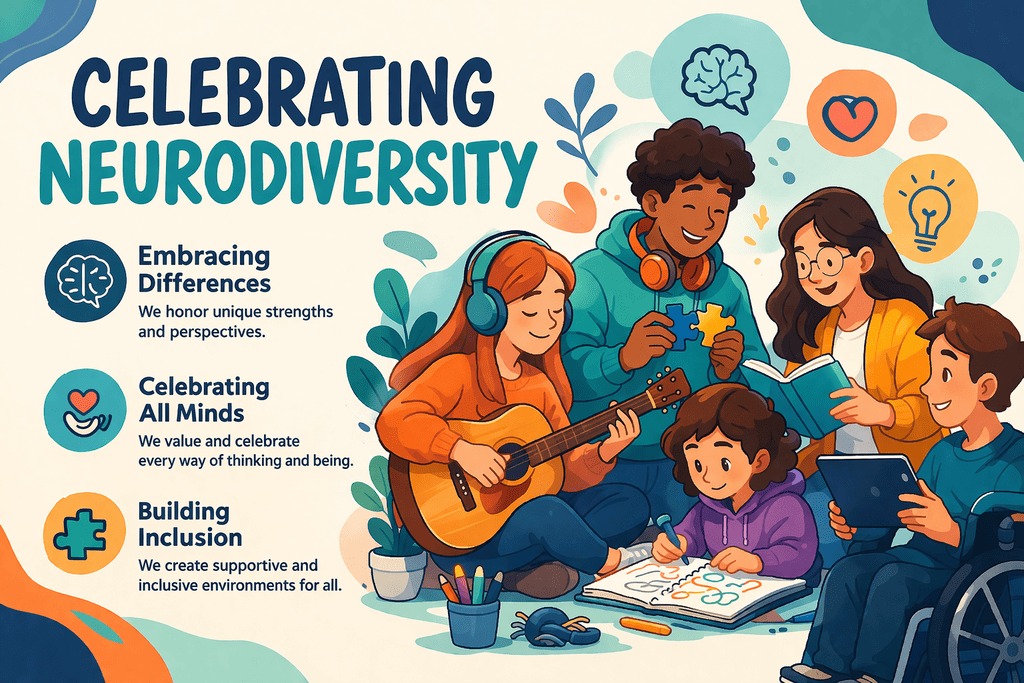
A neurodivergent mind does not follow the usual path – it creates new ones, shaped by insight, depth, and remarkable ways of thinking.
Being a neurodivergent person means having a different way of experiencing and interacting with the world. People who are neurodivergent have brains that work differently, with specific skills and capabilities that make each person unique.
This is not simply a difference in how the brain works, but a difference in the value, perspective, and potential each person brings into the world. Let’s dive in.
What Is Neurodiversity?
Neurodiversity means looking at the diverse nature of the human mind and finding something beautiful in everyone.
Definition: Neurodiversity describes the experiences of people who engage with the world and society in ways that may differ from what is typically expected or considered socially “standard.”
While neurotypical people often recognise and adjust to social norms across different situations, neurodivergent people may experience the world more intensely – both in how they respond to their physical environment and how they feel the expectations placed on them by society.
Explanation: No two brains develop in exactly the same way, and this natural variation shapes how people think, move, process information, and communicate.
The term neurodiversity is often used as an umbrella to describe neurological differences such as Dyslexia, Dyspraxia (DCD), Dyscalculia, Autism, and ADHD. But beyond any label, it is about recognising and valuing people who experience and engage with the world in their own distinct ways.
As humans, we were all born different. From our eyes and hair to the way we act and interact with the world. And every one of us brings a unique potential that, when recognised, can bring new ideas, creativity, and different ways of thinking into the world.
Did you know that some of the biggest breakthroughs in the world were created by neurodivergent people?
Around 15–20% of the UK population is neurodivergent. Rather than focusing only on difficulties or diagnoses, neurodiversity encourages a more balanced understanding – recognising both strengths and challenges. Many of the difficulties people experience are not inherent but arise from environments and systems that have been designed with a majority way of thinking in mind.
Diverse minds bring strengths that add real value across schools, universities, organisations, and the wider community.
Why the Concept of Neurodiversity Matters?
For many years, natural differences in how people think, learn, and experience the world were not understood as part of human diversity, but were instead defined through labels, diagnoses, and perceived limitations.
Historically, these differences were viewed through a medical lens that focused on what was “missing” or “impaired,” rather than recognising them as natural variations in how the human brain develops and functions. Over time, this shaped the way people were seen – often reduced to categories instead of being understood as whole people.
This has had a significant impact on people’s mental health and well-being, and families were significantly concerned as well.
Moving Away From the “Disorder” Narrative
The term “disorder” suggests that something is wrong, rather than recognising that someone may simply experience the world differently.
Language has played a powerful role in shaping how human differences have been understood over time. For decades, many neurological differences have been defined through a medical model that focuses on deficits, impairments, and what is considered to be “not functioning as expected,” rather than recognising natural variation in how the human brain develops and works.
This way of understanding has influenced not only diagnosis, but also education systems, workplaces, and wider society – often reinforcing the idea that difference needs to be corrected, rather than understood.
For example, autistic people are often described through the lens of autism spectrum disorder. Similarly, people with different sensory experiences are grouped into sensory processing disorders.
Over time, this way of understanding has shaped perceptions – focusing on what is seen as “not typical,” instead of recognising the full range of human experience.
So, what is considered typical? And who decides where that line is drawn?
Recognising Strengths Alongside Challenges
Neurodivergent people often show distinct strengths and abilities that stand out in specific areas. From an early age, differences in how their brains process information can shape the way they learn, focus, and engage with the world, sometimes leading to exceptional ability in particular domains.
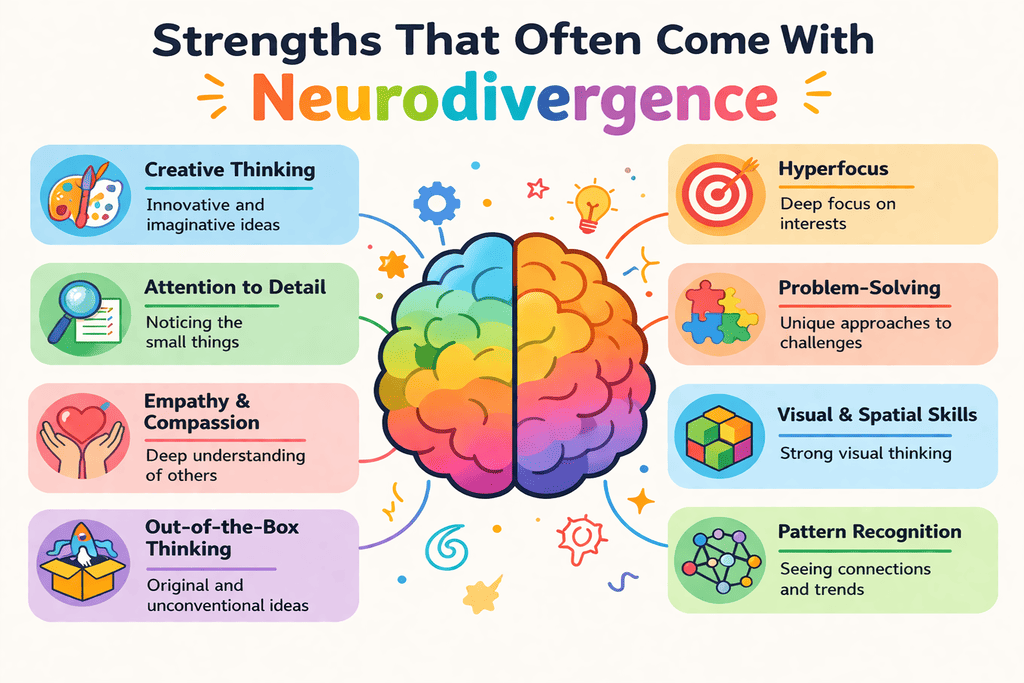
These strengths may appear in areas such as pattern recognition, memory, creativity, logical reasoning, or deep focus. When the environment allows these differences to be understood and supported, these abilities can become highly developed, offering new ways of thinking, problem-solving, and creating that might otherwise be overlooked.
Example 1
A child who finds handwriting difficult, such as someone with dysgraphia, may feel more at ease working with technology, showing a natural strength in areas like coding, logical thinking, and problem-solving.
Example 2
A child who experiences challenges with reading and writing, such as dyslexia, might connect deeply with music, showing a strong sensitivity to sound and an intuitive understanding of rhythm and patterns.
Example 3
As people grow, these strengths often become more visible. Someone with ADHD, for instance, may feel more comfortable in fast-moving environments where quick thinking and flexibility are valued. When something captures their interest, their ability to focus deeply can lead to strong creativity and productivity.
Example 4
In a similar way, autistic people may feel at ease in roles that involve structure, detail, and clear patterns. Their way of thinking can support careful analysis, consistency, and the ability to notice things others might miss, which can be especially valuable in areas like research, data, or quality-focused work.
Common Experiences of Neurodivergent People
Research consistently shows that many neurodivergent people share common experiences shaped by how they are understood by others and the environments they navigate – including increased rates of stress, anxiety, and burnout linked to ongoing efforts to adapt to social expectations.
This can affect mental and physical well-being over time, particularly when differences are not recognised or properly supported.
Feeling Different or Misunderstood
Sometimes, when the brain functions differently, people may need additional support in understanding social cues or learning new things. This is not about ability, but about how information is processed and how communication is experienced.
Because of this, situations that seem simple to others may feel confusing, overwhelming, or unclear. Over time, this can lead to a feeling of being “out of place” or misunderstood, especially when differences are not recognised or supported.
Example:
A person follows instructions exactly as they are given, but is later told they “missed the point,” because the expectation was implied rather than clearly explained.
Masking and Trying to “Fit In”
Many neurodivergent people learn to adjust their behaviour in order to meet expectations and avoid standing out. This can include copying social behaviours, holding back natural responses, or constantly thinking about how to act in different situations.
While this can help in the moment, it often comes with a cost. Maintaining this level of awareness and adjustment can be exhausting, and over time may lead to stress, burnout, or a sense of losing connection with oneself.
Example:
Maintaining eye contact, adjusting tone of voice, and monitoring body language throughout a conversation, even when it feels unnatural, just to meet expected social norms.
Dealing With Self-Doubt or Insecurity
When someone grows up feeling misunderstood or different, it can shape how they see themselves. They may begin to question their abilities or feel unsure in situations where they are actually capable.
This self-doubt does not come from a lack of potential, but from repeated experiences of not being fully seen or understood. With the right support and understanding, this can begin to shift, allowing confidence to grow in a way that feels more natural and grounded.
Example:
After being corrected multiple times for doing things “the wrong way,” a person begins to second-guess even simple decisions, despite having the skills to do them well.
Strengths That Often Come With Neurodivergence
Human nature can create remarkable masterpieces through its diversity. Some differences may be more emphasised within standard norms, while others go far beyond them, bringing something truly unique and valuable to humankind.
In the same way, neurodivergence can be understood through the distinct strengths it brings – ways of thinking, creating, and engaging with the world that add depth, originality, and new possibilities to everyday life.
Unique Ways of Thinking
Many neurodivergent people experience a natural ease with patterns, whether in numbers, systems, or creative work like music and art. Others find themselves able to focus deeply on what matters to them, noticing details that might go unseen by others. There can be a strong sense of curiosity, originality in thinking, or an ability to approach situations from a different angle – bringing fresh ideas into spaces that often need them.
For some, sensitivity becomes a form of awareness, picking up on sounds, emotions, or subtle changes in the environment. For others, quick thinking, adaptability, or holding onto information in unique ways become part of how they move through everyday life.
Strong Passions and Deep Interests
Some people may spend hours exploring a specific topic like space, psychology, or history, building knowledge that goes far beyond what is expected. Others might become deeply absorbed in creative interests such as drawing, music, or design, constantly refining their skills and expressing themselves in unique ways.
For others, this shows up in collecting, organising, or mastering details within a subject they love, while for others, it’s a strong drive to understand how things work. These deep interests are not just preferences – they often become a source of comfort, identity, and meaningful engagement with the world.
Empathy and Emotional Insight
Some people may feel emotions very deeply, sensing shifts in mood or atmosphere even when nothing is said out loud. Others might notice small changes in someone’s tone, body language, or energy, allowing them to understand how someone feels without needing many words.
For others, this shows up as a strong sense of care, fairness, or protectiveness toward others, while for others it becomes an ability to connect on a meaningful, emotional level. These experiences can shape how people build relationships, respond to others, and move through the world with a heightened sense of awareness.
The Value of Different Minds in Society
Across history, different ways of thinking have led to some of the most important contributions to humanity. People believed to be neurodivergent have shaped science, technology, and the arts in lasting ways – whether through developing new theories, creating groundbreaking inventions, or expressing ideas that changed how people understand the world.
Their ability to think differently, question existing norms, or focus deeply has often been at the centre of these contributions.
- Albert Einstein – explained how time and space actually work, and changed how we understand the universe
- Nikola Tesla – created ideas that made it possible for electricity to reach homes and cities
- Alan Turing – built the first ideas behind computers, which is why we have technology today
- Leonardo da Vinci – painted famous artworks and designed inventions long before they existed
- Vincent van Gogh – painted feelings and emotions in a way people could deeply connect with
- Steve Jobs – made technology simple and part of everyday life, like smartphones and personal computers
Neurodivergence as Part of Identity
Neurodiversity is no longer used only for people with a formal diagnosis like autism or ADHD. Today, it also includes people who simply recognise that they think or process things differently, even if they’ve never been diagnosed. For many young people, especially in early adolescence, this idea helps them understand why certain things feel harder, like social situations or learning in the same way as others.
It gives a simple explanation – that their brain just works differently – and can help them feel less alone by connecting with others who feel the same. Some young people also look for an assessment to better understand themselves and make sense of their experiences. Whether they receive a diagnosis or not, that process can still help them feel more understood and find ways to manage challenges in everyday life.
How Society Can Better Support Neurodivergent People?
1. Adapt the environment, not the person
- Offer flexibility with time, tasks, and expectations
- Present information in different ways (visual, written, verbal)
- Break down complex tasks into clearer, manageable steps
2. Create spaces that feel manageable, not overwhelming
- Provide access to quieter areas when needed
- Be mindful of noise, lighting, and busy environments
- Keep routines consistent where possible
3. Make communication more thoughtful and clear
- Allow time to process and respond
- Use direct, simple language instead of vague instructions
- Accept different communication styles without pressure to “fit in”
4. Take people’s experiences seriously from the start
- Listen when someone expresses difficulty or feels different
- Make assessments accessible without stigma
- Focus on understanding the person, not just giving a label
5. Notice strengths and create space for them
- Recognise abilities like deep focus, creativity, and attention to detail
- Support roles and tasks where these can be used meaningfully
- Move beyond seeing only challenges
6. Build a culture of understanding, not assumption
- Educate teams, schools, and communities
- Challenge stereotypes and quick judgments
- Encourage acceptance of different ways of thinking
Catalyst Care Group Celebrates All Aspects of Neurodiversity
Catalyst Care Group recognises neurodiversity as a natural and valuable part of being human, where different ways of thinking, communicating, and experiencing the world are understood rather than questioned.
Within everyday practice, this means taking time to understand each person beyond labels – through personalised assessment, listening to lived experiences, and working alongside families, carers, and the wider team. Support is shaped around how each person makes sense of the world, creating approaches that feel meaningful, respectful, and aligned with who they are.
Across services, this understanding is reflected in how teams work together. From PBS practitioners and mental health nurses to occupational therapists and multimedia specialists, each role contributes to a more complete picture of the person.
By focusing on strengths, reducing distress, and supporting people to express their needs in ways that are heard and understood, Catalyst Care Group creates environments where people feel safe to be themselves and where different ways of thinking are not just accepted, but genuinely valued.