
Key Takeaways
- 1 in 10 children are estimated to have experienced neglect in UK research NSPCC, 2026.
- 37% of children on protection plans in England had emotional abuse recorded as the initial category in 2025 DfE, 2025.
- Emotional neglect can exist in a home where a child appears well cared for.
- Neglect can affect how a child’s brain responds to stress.
- The consequences can extend far beyond childhood.
Where is the line between emotional neglect and emotional abuse? And how can we recognise when a child is experiencing either?
Emotional neglect is often difficult to recognise because it doesn’t always involve obvious signs of harm. A child may have food, clean clothes, a safe home and everything they need physically, yet still feel emotionally unsupported, unseen or alone.
Children who experience physical, cognitive or emotional neglect may live with ongoing anxiety and stress. This can trigger repeated releases of stress hormones that, over time, can affect their developing brains and have lasting consequences for their emotional well-being, learning, and cognitive development.
Childhood emotional neglect can leave wounds that are difficult to see. When a child repeatedly feels ignored, rejected or emotionally unsupported, they may begin to blame themselves. Instead of questioning why they aren’t receiving the love, comfort and attention they need, they may start believing they don’t deserve it.
Over time, these experiences can become a form of trauma, leaving children with feelings of guilt, shame and self-blame that can stay with them long into adulthood, affecting how they see themselves and how they connect with others.
What is Emotional Neglect?
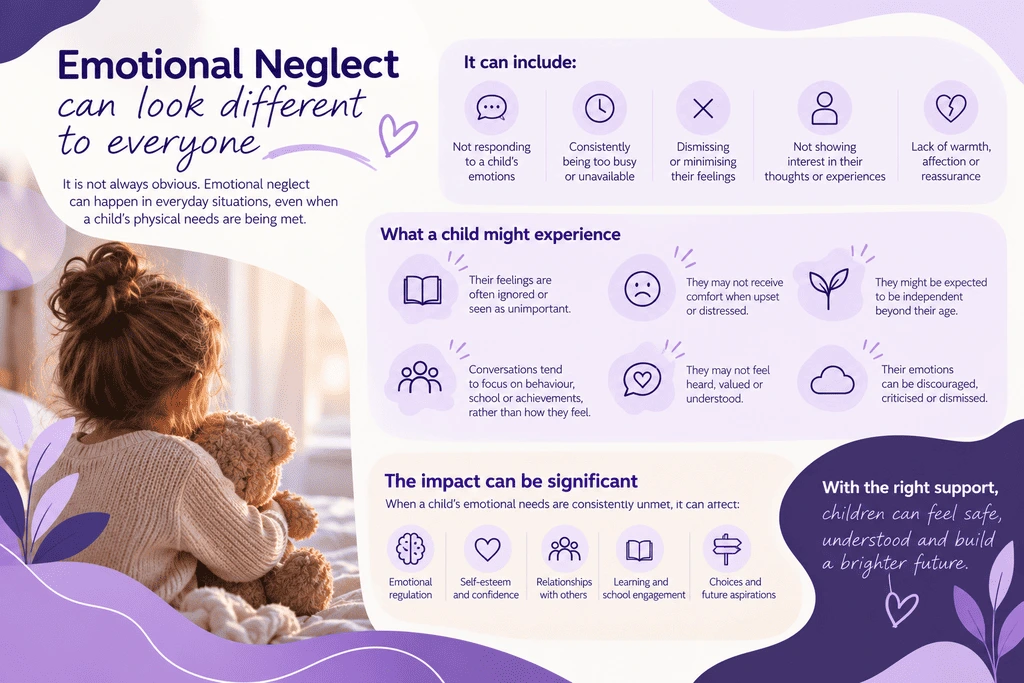
Childhood emotional neglect is a form of child maltreatment in which a parent or caregiver consistently fails to meet a child’s emotional needs. It can happen without deliberate harm or obvious signs of mistreatment, making it one of the less visible forms of childhood adversity. A child may gradually learn that expressing their feelings changes nothing, that asking for comfort is pointless or that their worries are something they must deal with alone.
Emotional neglect is recognised as an Adverse Childhood Experience (ACE) and can contribute to childhood trauma. It is often difficult to recognise because it can happen without shouting, punishment or obvious signs of harm. Sometimes, it is found in everyday moments when a child reaches out for love, comfort or understanding and receives no response.
Emotional neglect can look like:
- Being ignored when upset: A child cries, feels frightened or asks for comfort, but no one responds.
- Having their feelings dismissed: Being repeatedly told to stop crying, toughen up or stop being so sensitive.
- Growing up without affection: Rarely receiving hugs, kind words, encouragement or reassurance.
- Feeling invisible at home: No one seems interested in how their day went, what makes them happy, or what worries them.
- Being afraid to express emotions: Learning that showing sadness, anger, or fear will lead to rejection, criticism or silence.
- Having to cope alone: Being expected to manage difficult feelings without the guidance and support of an adult.
- Feeling loved only when behaving well: Receiving warmth and attention mainly when meeting expectations or making adults happy.
- Taking responsibility for a parent’s emotions: Feeling responsible for keeping a parent happy, calm or emotionally supported.
- Having achievements overlooked: Rarely hearing that someone is happy for them, appreciates their efforts or notices their progress.
- Being left alone during difficult experiences: Going through bullying, grief, family conflict or other painful situations without emotional support.
These examples reflect the patterns described in the NSPCC’s guidance on emotional neglect and emotional abuse, including a lack of nurturing, emotional responsiveness and consistent affection.
An important distinction is that emotional neglect is usually a repeated pattern, not an occasional moment when a parent is tired, distracted or responds poorly. The concern is when a child consistently has no one to turn to for the emotional care they need.
Why Emotional Neglect Can Be Difficult to Recognise
Emotional neglect is often difficult to identify because there may be no physical evidence of harm, and its effects can be mistaken for other emotional, behavioural or developmental difficulties. A child may experience anxiety, withdrawal, difficulties regulating emotions or problems forming relationships, without the underlying lack of responsive care being recognised.
The concern becomes more serious when there is a persistent pattern of emotional unavailability or unresponsiveness from emotionally neglectful parents or caregivers.
For example, a young child may repeatedly seek comfort from an adult who remains emotionally unresponsive, or eventually stop seeking comfort altogether. Research also shows that prolonged absence of responsive caregiving, particularly in early childhood, can disrupt developing brain systems involved in learning, emotional regulation and responses to stress.
This means emotional neglect can affect a child’s development long before its consequences are fully recognised.
Childhood emotional neglect, particularly when it is severe, persistent or begins early in life, can have consequences that extend far beyond childhood. The risks are greater when emotional neglect occurs alongside other adverse childhood experiences, such as domestic abuse, physical neglect or prolonged family instability.
Research has linked chronic neglect and the absence of responsive caregiving with several serious outcomes:
- Developmental delays: Difficulties with language, learning, attention and cognitive development, particularly when neglect occurs during early childhood.
- Attachment and relationship difficulties: Problems developing trust, seeking comfort and forming secure relationships with caregivers.
- Mental health difficulties: Increased risk of depression, anxiety, emotional dysregulation and trauma-related symptoms.
- Behavioural and social difficulties: Aggression, withdrawal, difficulties managing distress and problems maintaining relationships.
- Self-harm and suicidal behaviour: Childhood maltreatment, including neglect, is associated with increased risk, although emotional neglect alone cannot be assumed to cause these outcomes.
- Long-term health difficulties: Prolonged adversity and chronic stress may affect stress-response systems and are associated with poorer physical and mental health later in life.
These outcomes are not inevitable, and the evidence is stronger for some associations than others. Emotional neglect can also occur alongside other forms of maltreatment, making its independent effects difficult to isolate.
Common Signs of Emotional Neglect in a Child
For children who have experienced childhood emotional neglect, the consequences can appear in their behaviour, emotional development and relationships with others. Persistent fear, difficulty accepting comfort, delayed development or extreme responses to everyday situations may raise concerns about neglect or other forms of child abuse. These signs deserve careful attention, especially when they occur alongside a repeated lack of emotional care at home.
NICE guidance identifies persistent emotional unresponsiveness from caregivers as a particular concern, alongside changes in children’s behaviour, emotional responses and relationships. However, no individual sign confirms emotional neglect or child abuse; each needs to be understood in the context of the child’s circumstances and development.
Low Confidence and Poor Self-Esteem
Children often learn how to value themselves through the way they are treated by the people closest to them. When a child is repeatedly ignored, criticised or made to feel unimportant by their own parents, they may begin to question their worth. An emotionally neglected child may become highly sensitive to criticism, constantly seek approval or avoid trying new things because they are afraid of making mistakes or disappointing others.
Over time, these experiences can affect a child’s confidence and self-esteem. They may compare themselves negatively with others, struggle to recognise their strengths or believe they are undeserving of love and attention. Some children internalise these feelings so deeply that they begin to see themselves as the problem, carrying shame and self-doubt into adolescence and adulthood.
Unusual Independence or Reluctance to Ask for Help
In some emotionally neglected children, unusual independence may reflect an insecure attachment pattern developed through repeated experiences of unmet emotional needs. When caregivers consistently fail to respond to distress, a child may learn to suppress outward expressions of vulnerability and avoid seeking comfort. This can resemble an avoidant attachment pattern, where a child appears emotionally self-sufficient despite still experiencing distress and needing reassurance.
More concerning signs may include a young child who does not seek comfort after being hurt or frightened, consistently rejects reassurance from familiar caregivers, or shows little expectation that an adult will respond when they are distressed. These behaviours require careful assessment because they can have several causes. The concern is not that a child can manage things independently, but that they may have learnt they cannot depend on adults when they genuinely need care.
Withdrawal and Social Isolation
Children who experience persistent emotional neglect may develop difficulties with social information processing – the ability to recognise social cues, interpret other people’s intentions and respond appropriately.
Research on childhood maltreatment suggests that some children become more likely to interpret ambiguous interactions as rejection or hostility. Others withdraw to avoid anticipated negative experiences. This can affect a child’s social development, particularly their ability to establish friendships and manage disagreements.
For example, a child may interpret a classmate’s neutral comment as criticism, assume they are deliberately being excluded when friends make plans without them, or react strongly to minor disagreements.
Others may avoid participating in group activities, struggle to approach unfamiliar peers or become socially isolated despite wanting friendships. The concern becomes greater when withdrawal is persistent, affects everyday functioning or occurs alongside other signs of emotional distress.
These patterns are not specific to emotional neglect and should be considered alongside experiences such as bullying, anxiety and other developmental or environmental factors.
Poor Emotional Regulation
A child cannot be expected to know how to manage overwhelming emotions without first experiencing what it feels like to be comforted, reassured and supported through distress. This process, known as co-regulation, is an important part of emotional development. Emotional neglect in childhood can interfere with this process, leaving some children particularly sensitive to stress and others accustomed to hiding their feelings. A child may react with intense anger, panic or prolonged crying because they have not developed reliable ways to manage emotional distress.
When emotional neglect is severe and prolonged, the absence of consistent adult support can also contribute to toxic stress, affecting the developing systems responsible for managing stress, attention and emotional responses. This may explain why some children struggle to calm down even after a stressful situation has ended, while others appear emotionally detached during upsetting experiences.
These difficulties deserve careful assessment, particularly when they occur alongside persistent emotional unresponsiveness from caregivers
Aggression and Challenging Behaviour
Sometimes, a child’s anger is the only emotion adults notice, while the fear, rejection or hurt underneath goes unrecognised. Children experiencing emotional neglect may express distress through aggression, defiance or behaviour that appears disproportionate to the situation.
For example, a child who repeatedly feels dismissed at home may react angrily when a teacher corrects them, become physically aggressive during disagreements or lash out when they feel excluded. These reactions can sometimes reflect difficulties recognising and communicating emotions, alongside an increased sensitivity to perceived rejection.
Children who have been emotionally abused or exposed to domestic violence may also develop heightened threat responses. Living with intimidation, hostility or unpredictable conflict can make it difficult to distinguish everyday disagreements from genuine danger. A raised voice, sudden movement or seemingly harmless criticism may trigger a defensive reaction. Some children may also imitate aggressive behaviour they have witnessed at home.
Understanding what a child’s behaviour may be communicating is essential, especially when repeated punishment risks overlooking the distress or fear contributing to it.
Signs Across Developmental Stages
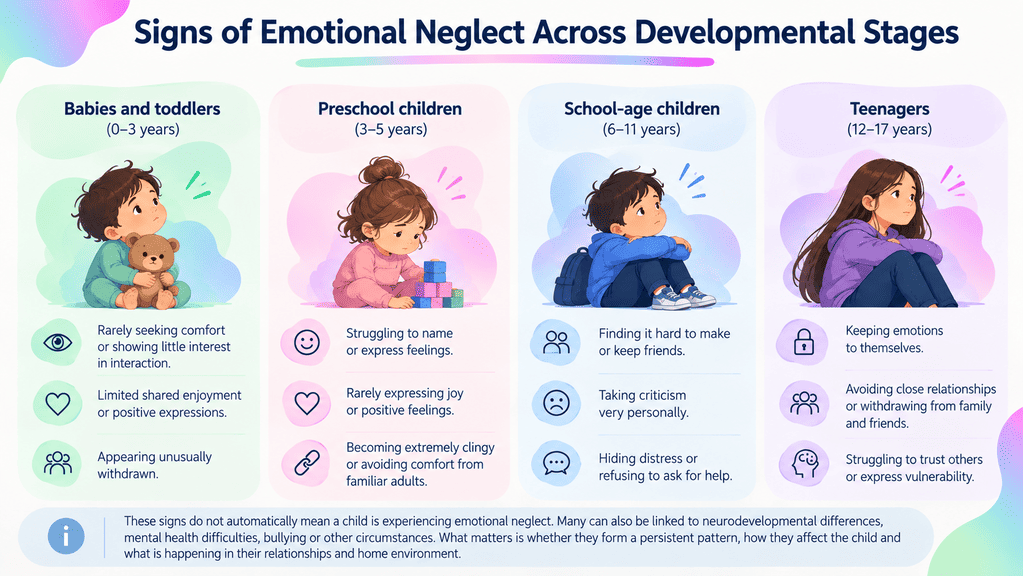
Emotional neglect can affect children differently depending on their age, emotional development and relationships with caregivers. A younger child may struggle with expressing positive feelings or seeking comfort, while an older child may have difficulty identifying their emotions, developing social skills or forming relationships with other children. Recognising these differences can help adults notice concerns that might otherwise be mistaken for personality traits or typical developmental changes.
Early Childhood (Ages 2–6)
At this age, children are beginning to understand their feelings and depend on adults to make sense of experiences they cannot yet explain. When their emotional needs are repeatedly ignored, some children gradually stop reaching out for comfort. A child might fall, get hurt and make no attempt to seek reassurance, or become unusually quiet when upset because crying has never brought a comforting response. Others may become extremely clingy, fearful of separation or desperate for attention. One of the more painful signs is a young child learning to keep their distress to themselves before they have even learnt how to understand it.
Middle Childhood (Ages 7–12)
By school age, children are becoming more aware of how others see and treat them. For a child experiencing emotional neglect, everyday situations can carry a deeper fear of rejection or disappointment. They might apologise for things they haven’t done, become visibly upset by a teacher’s criticism or avoid telling their parents about problems at school. Some become the child who never causes trouble, always follows instructions and asks for very little. Others express their distress through anger, arguments or difficulties with friendships. A child can appear to be coping well at school while feeling completely alone with their emotions at home.
Adolescence
Teenagers may become particularly skilled at hiding the effects of emotional neglect. After years of feeling unheard or dismissed, some stop sharing what is happening in their lives, even when they are struggling. They may find it difficult to trust affection, fear abandonment or seek acceptance in relationships that leave them vulnerable to further harm. Others become fiercely independent, convinced that needing emotional support is a weakness. For some, these experiences contribute to depression, anxiety, self-harm or a persistent feeling of worthlessness. Behind a teenager who says, “I don’t care” or “Leave me alone”, there may be someone who has learnt that expressing their feelings changes nothing. These behaviours can have many causes and should always be understood in context.
Emotional Neglect at Home
Emotional neglect can happen in homes where a child’s physical needs are met, but their feelings are repeatedly ignored, dismissed or treated as unimportant. It may involve little affection, a lack of comfort during distress, or adults who are consistently emotionally unavailable. In some families, constantly criticising, humiliating or blaming a child can occur alongside emotional neglect, crossing into emotional or psychological abuse.
From Parents
Parents play a central role in how children learn to understand their emotions and see themselves. When a parent repeatedly dismisses a child’s feelings, responds to tears with anger or makes affection dependent on good behaviour, the child may begin to hide their emotions to avoid rejection. For example, a child who hears “Stop being so sensitive” whenever they are upset may eventually stop sharing what hurts them. Emotional neglect can also exist without obvious cruelty, particularly when parents are physically present but consistently fail to notice or respond to their child’s emotional needs. Repeated threats, humiliation and deliberate rejection may constitute psychological abuse.
From Carers
Children who depend on foster carers, kinship carers or other adults for their daily care need the same emotional consistency, reassurance and sense of belonging. Neglect may occur when a carer provides meals, clothing and routines but repeatedly overlooks a child’s distress, avoids meaningful interaction or treats requests for comfort as attention-seeking. For children who have already experienced separation, loss or trauma, an emotionally unresponsive caregiving environment may reinforce feelings of insecurity and mistrust. A child who stops asking for comfort may appear settled, even when they have simply stopped expecting anyone to respond.
The Impact of Childhood Neglect in Adults
Many adults who experienced emotional neglect during childhood may not recognise how deeply these experiences have affected their confidence, relationships and emotional well-being. Growing up without consistent emotional support can leave lasting patterns that continue into adulthood, including:
- Low self-esteem and self-worth: Feeling inadequate, questioning their value or believing they do not deserve love and attention.
- Difficulty identifying and expressing emotions: Struggling to understand what they feel, communicate their needs or open up to others.
- Fear of rejection and abandonment: Becoming highly sensitive to criticism, changes in someone’s behaviour or signs of emotional distance.
- Difficulty maintaining healthy relationships: Struggling with trust, emotional intimacy, boundaries or accepting genuine affection.
- Excessive independence: Feeling uncomfortable relying on others, asking for support or admitting when things become overwhelming.
- People-pleasing and self-neglect: Prioritising other people’s feelings and needs while ignoring their own to avoid conflict or rejection.
- Persistent guilt and shame: Blaming themselves when relationships go wrong or feeling guilty for expressing emotions and setting boundaries.
- Increased vulnerability to mental health difficulties: Experiencing anxiety, depression, emotional numbness or difficulties managing stress.
These experiences do not define every adult who grew up with emotional neglect. With greater understanding, supportive relationships and appropriate therapeutic support, people can begin to recognise and change patterns developed during childhood.
Supporting a Child Experiencing Emotional Neglect
For a child who has repeatedly been ignored or dismissed, trusting an adult with their feelings may take time. Some children become withdrawn, while others respond with anger or reject attempts at comfort. Emotional validation is an important starting point. This means acknowledging what a child is feeling without judging, minimising or immediately trying to correct their reaction. Simple responses such as “I can see that really upset you” or “It’s okay to feel angry. I’m here to listen” can help a child feel heard and understood.
Equally important is consistent presence. Children need adults who follow through on promises, respond to distress and remain emotionally available even when behaviour becomes difficult. When emotionally neglectful parents struggle to provide this, other trusted adults, including relatives, teachers and carers, can offer valuable support. However, their involvement should not replace appropriate safeguarding action or professional intervention when a child’s emotional needs continue to be neglected.
Why Early Support Matters?
The longer emotional neglect continues, the more opportunities there are for harmful patterns to become established. A child who struggles to manage emotions, trust others or recognise their own worth may face increasing difficulties at school, at home and in relationships. Without appropriate support, some children become more vulnerable to bullying, aggression, risky behaviour, substance misuse and mental health difficulties during adolescence and adulthood.
Early support can help prevent difficulties from becoming more deeply rooted. When children experience reliable relationships, emotional reassurance and appropriate psychological support, they have opportunities to develop healthier ways of responding to stress, expressing their needs and building relationships. Early intervention cannot erase what a child has experienced, but it can make a meaningful difference to what happens next.
Long-Term Consequences of Neglect
The effects of childhood emotional neglect can continue well into adulthood, sometimes without people recognising the connection between their early experiences and the difficulties they face today. Research has associated childhood neglect with an increased risk of:
- Mental health difficulties: Depression, anxiety, trauma-related symptoms and persistent emotional distress.
- Substance misuse and addiction: Turning to alcohol or drugs as a way of coping with difficult emotions.
- Unhealthy relationships: Difficulty trusting others, setting boundaries or recognising harmful behaviour.
- Poor physical health: Increased vulnerability to stress-related health problems and poorer long-term health outcomes.
- Social and professional difficulties: Struggles with confidence, maintaining relationships and managing conflict.
These outcomes are not inevitable. The severity and duration of neglect, the presence of other adverse childhood experiences and access to supportive relationships can all influence how a person is affected. Early intervention and appropriate support can make a meaningful difference, even when neglect has continued for years.
In the past couple of years, we have worked closely with Lisa, a woman who has spent 30 years in a hospital. Lisa’s childhood had been anything but peaceful. Since the age of three she expereince abuse, neglect and a year later ended up in a hospital, a jouryney that lasted 3 decades. Today, Lisa lives in the community, doing the things she likes and learning about the world beyond walls.
Health and Social Support with Catalyst Care Group
Children need to feel heard, understood and emotionally supported, particularly when they have experienced neglect, abuse or other forms of childhood trauma. At Catalyst Care Group, we provide personalised, trauma-informed care and mental health support that considers each child’s experiences, emotional needs and relationships.
We use PBS support to better understand behaviour of concern and work with the young person and their staff team to find the right supportive strategies, and help learn new skills to manage difficult emotions and stress in less harmful ways. – Georgina Rickard
Our approach focuses on:
- Trauma-informed care: Understanding how past experiences may influence a child’s emotions, behaviour and sense of safety, without judgement or blame.
- Emotional validation: Recognising a child’s feelings, listening without criticism and supporting them to express emotions in ways that feel comfortable.
- Community mental health nursing: Providing professional mental health support to recognise emotional distress, develop coping strategies and address emerging mental health difficulties.
- Consistent, trusting relationships: Creating predictable routines and providing reliable support so children know who they can turn to when they are struggling.
- Family and carer support: Working with the people closest to the child to encourage emotional responsiveness, healthy communication and self-care.
Every child deserves to feel safe, loved and understood. With patience, consistent care and the right support, children can begin to trust again, express their feelings without fear and build healthy relationships. Most importantly, they deserve the opportunity to grow into emotionally healthy, confident adults who feel free to follow their dreams, pursue their aspirations and build a future they are excited about.
If you’re looking for support for a child or loved one, contact our team to discuss their needs and explore how we can support their emotional well-being and development.